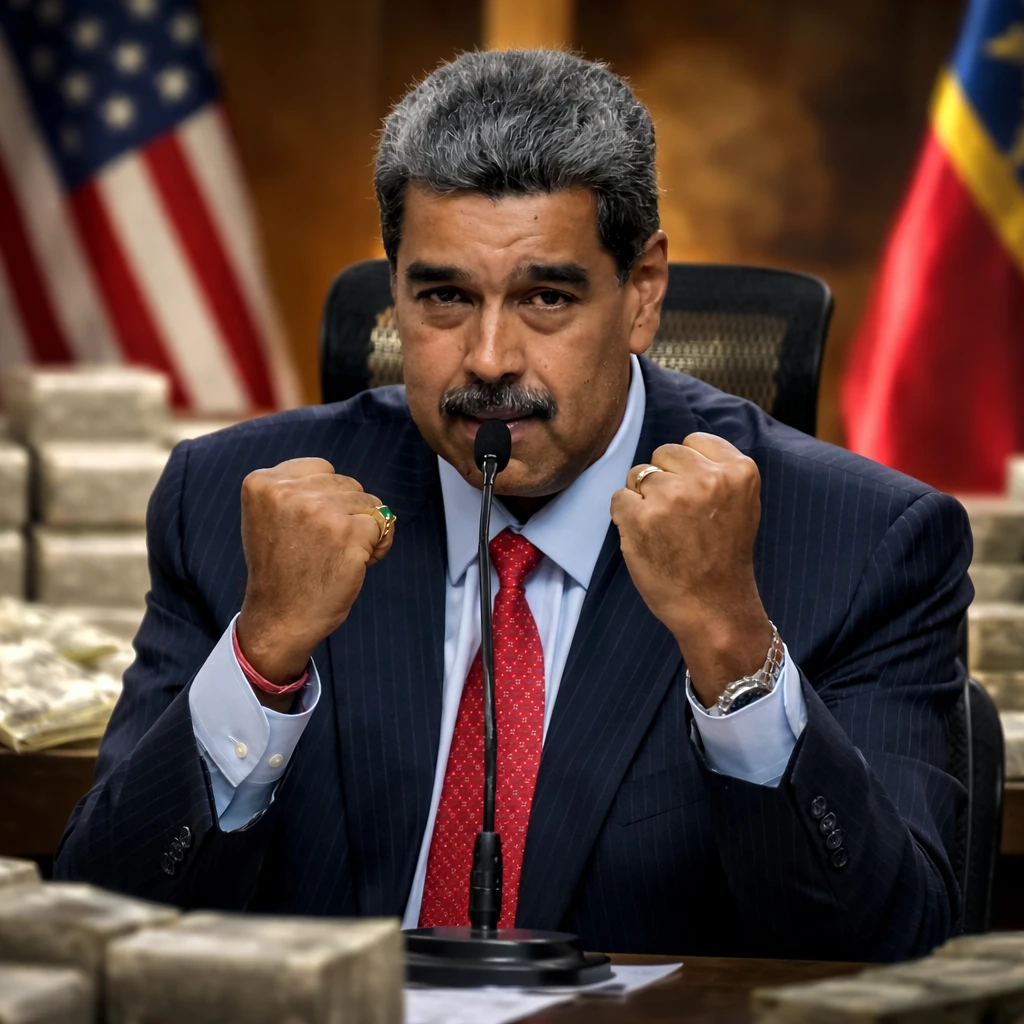

The U.S. Department of Justice has publicly revealed detailed charges against Venezuelan President Nicolás Maduro, asserting that he led a "corrupt, illegitimate government" sustained through an extensive drug trafficking scheme exporting massive quantities of cocaine into the United States. The recent arrest of Maduro and his spouse in a precision military operation within Venezuela sets a significant precedent as U.S. prosecutors prepare for a high-profile case at a federal courthouse in Manhattan, New York.
Attorney General Pam Bondi posted on X (formerly Twitter) emphasizing that Maduro and his wife "will soon face the full wrath of American justice on American soil in American courts," underlining the prominence of the legal actions underway.
Charges Filed Against Maduro and Associates
Maduro faces multiple federal charges alongside his wife, Cilia Flores, their son, and three additional accomplices. The indictment specifies four core charges: conspiracy related to narco-terrorism, conspiracy to import cocaine, unlawful possession of machine guns and destructive devices, and conspiracy to possess these weapons. These allegations mirror those in a prior indictment filed in 2020 during the previous U.S. administration. The latest indictments, made public just before Christmas after being sealed in the Southern District of New York, broaden the scope by incorporating charges against Maduro's wife.
It remains undetermined when Maduro and Flores will hold their initial court appearance. Visual material circulated on social media by an official White House account showed Maduro in good spirits under escort by two federal agents inside the DEA office in New York. Observers expect Maduro to be held in custody at a federal detention center in Brooklyn while awaiting trial proceedings.
Extensive Allegations of Drug Trafficking and Corruption
The indictment alleges that Maduro engaged in partnerships with notorious and violent drug trafficking organizations, including the Sinaloa Cartel and Tren de Aragua gang, enabling the shipment of thousands of tons of cocaine through Venezuelan territory destined for the United States. Such alliances reportedly funneled profits to senior Venezuelan officials who facilitated and shielded these narcotics operations.
The document states that Maduro fostered "cocaine-fueled corruption," benefiting himself, his ruling regime, and family members. It further alleges that Maduro and his family extended law enforcement protection and logistical assistance to cartels operating regionally, contributing to as much as 250 metric tons of cocaine trafficking annually through Venezuela by 2020.
Drug shipments reportedly utilized diverse methods including fast boats, fishing vessels, container ships, and aircraft landing on clandestine airstrips. The indictment portrays a cycle of narcotics-related corruption that financially enriches Venezuelan officials and supports violent narcotics groups, which operate with impunity within Venezuela, producing and transporting cocaine for the U.S. market.
Involvement in Violence and Bribery
Beyond drug trafficking, the indictment accuses Maduro and his wife of directing kidnappings, assaults, and killings targeting individuals indebted to them or interfering with their trafficking network. Specifically cited is the homicide of a local drug lord in Caracas.
Cilia Flores is also charged with accepting substantial bribes in 2007 to arrange a meeting between a significant drug trafficker and the head of Venezuela’s National Anti-Drug Office. Following this corrupt meeting, the trafficker reportedly agreed to monthly bribes for the official and paid significant sums per cocaine flight to guarantee safe passage, with some of the funds benefiting Flores.
Recorded conversations in 2015 involving nephews of Maduro's wife reveal agreements to dispatch large cocaine shipments via Maduro’s presidential airport hangar. The nephews indicated hostility toward the United States, characterizing themselves as being "at war" with the country. They were convicted in 2017 for drug trafficking conspiracies before release in 2022 as part of a prisoner exchange involving seven detained Americans.
Military Operation and Legal Proceedings
During a press briefing, U.S. Secretary of State Marco Rubio and Chairman of the Joint Chiefs of Staff Dan Caine described the operation to seize Maduro and his wife as a justice department-led law enforcement mission, supported by military forces on request from the Department of Justice. Rubio labeled Maduro a “fugitive of American justice” with an outstanding $50 million reward, emphasizing the collaboration between the military and justice departments in executing the capture.