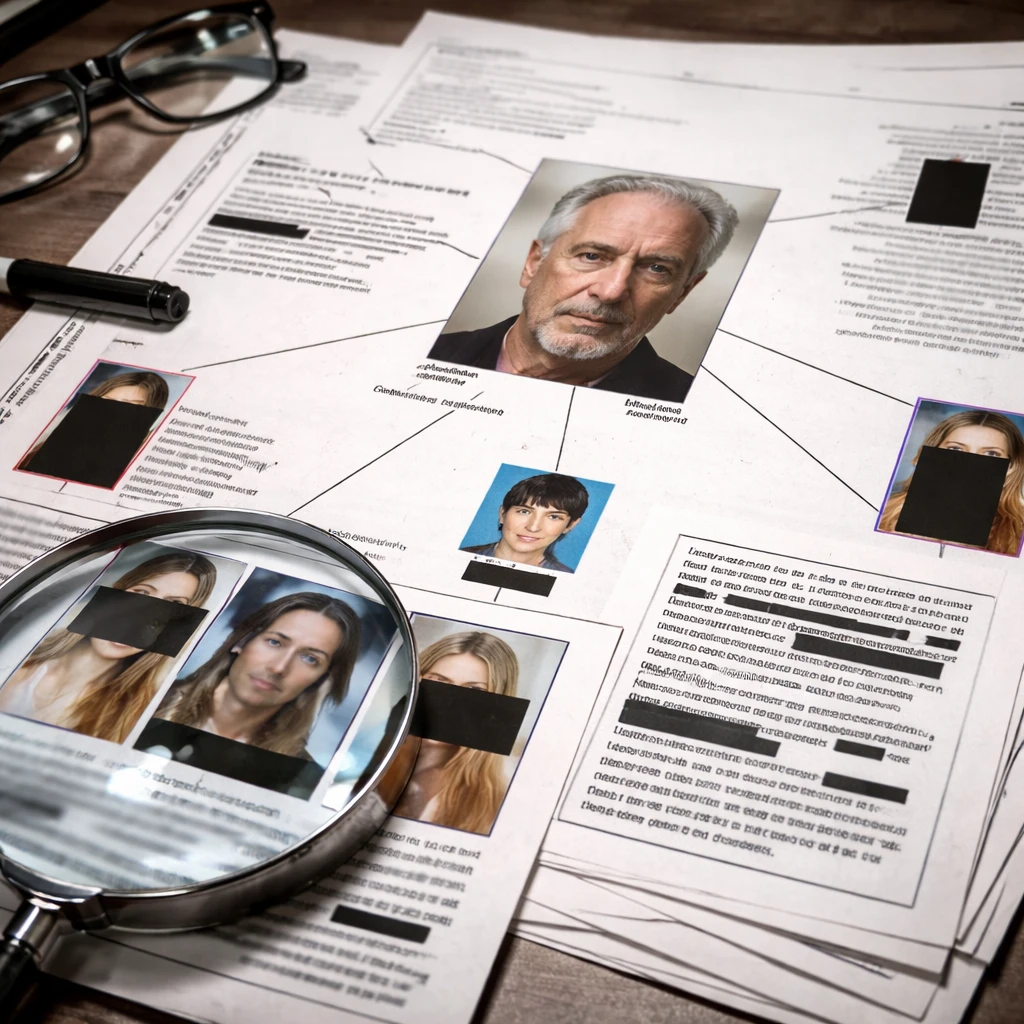

The U.S. Department of Justice (DOJ) disclosed a substantial volume of documents on Friday related to the investigation of Jeffrey Epstein, as required by legislation intended to increase transparency about the case. However, the release included graphic images of nude individuals, names and faces of sexual abuse victims, and personal financial and social security information displayed openly. This has raised alarm regarding improper handling of privacy protections mandated by law to shield Epstein's victims.
The law required that victims’ names be redacted from all released files and that photos exhibiting victims' faces or bodies be censored. Despite these mandates, numerous examples have emerged showing incomplete, inconsistent, or entirely absent redactions, as uncovered by a review conducted by multiple news organizations including The Associated Press.
One harrowing instance involves a photograph depicting a minor girl, who was hired to provide sexual massages for Epstein in Florida, among the files portraying alleged victims. Additionally, police reports naming several victims—including some not previously publicly identified—were released without any censorship.
Although the DOJ has taken steps to rectify these lapses, as recently as Wednesday evening, the official website still contained images such as a nude woman’s bathroom selfie and another photograph showing a woman topless, both with fully visible faces.
In response to these exposures, several victims and their legal representatives contacted the DOJ, urging them to take down the website and appoint an independent monitor to prevent further disclosure errors. A hearing set for Wednesday in New York was canceled following progress toward resolving the issue, though attorney Brittany Henderson noted that all possible legal avenues to address the "permanent and irreparable" harm inflicted on some victims remain under consideration.
“This is not merely a technical failure,” Henderson stated in a press release. “It is a failure to protect human beings whom our government had promised to safeguard. Until each document is properly censored, this failure persists.”
Annie Farmer, who reported being sexually assaulted by Epstein and his associate Ghislaine Maxwell at age 16, acknowledged that while her name was already public knowledge, the documents revealed sensitive details she wished to keep private, such as her birthdate and phone number. She expressed anger over the careless handling of these materials, emphasizing the resultant danger to affected individuals.
The DOJ attributed the disclosure errors to human and technical mistakes, claiming that large portions of the problematic content have been withdrawn while censored versions are being prepared. The review and redaction of millions of pages occurred rapidly, as the law enacted on November 19 by President Donald Trump afforded the department only 30 days to release the documents. The deadline was not initially met, with officials citing the necessity for additional time to implement adequate privacy protections.
Hundreds of attorneys were reassigned from their usual duties, including overseeing criminal cases, to participate in the document review, to a degree that prompted at least one New York judge’s concern about delays in other proceedings. The published database represents the most extensive release of files in the Epstein investigations since his death in a New York jail cell in 2019 while awaiting trial on federal sex trafficking charges.
Analysis by journalists revealed multiple cases in which victim names and personal details remain visible despite instructions to limit redactions strictly to the victims and their relatives. Paradoxically, some non-victim individuals, such as lawyers and public figures, had their names blacked out. There were also examples of over-redaction, including the censorship of a common name "José" in a church nativity caption and even the name of a dog in an email excerpt.
The DOJ stated its intent was to cover any photographic element depicting nudity or identifiable victims. Yet, some reviewed images partially obscured women’s faces but left much of their nude bodies exposed, including photos of women trying on clothes in store fitting rooms or lounging in swimwear. In one set of over 100 images of a young woman, nearly all pictures were censored except for one displaying her face clearly.
The ongoing publication of these files has ignited extensive debates regarding privacy protections, transparency, and the government’s responsibility toward vulnerable individuals involved in high-profile criminal investigations.