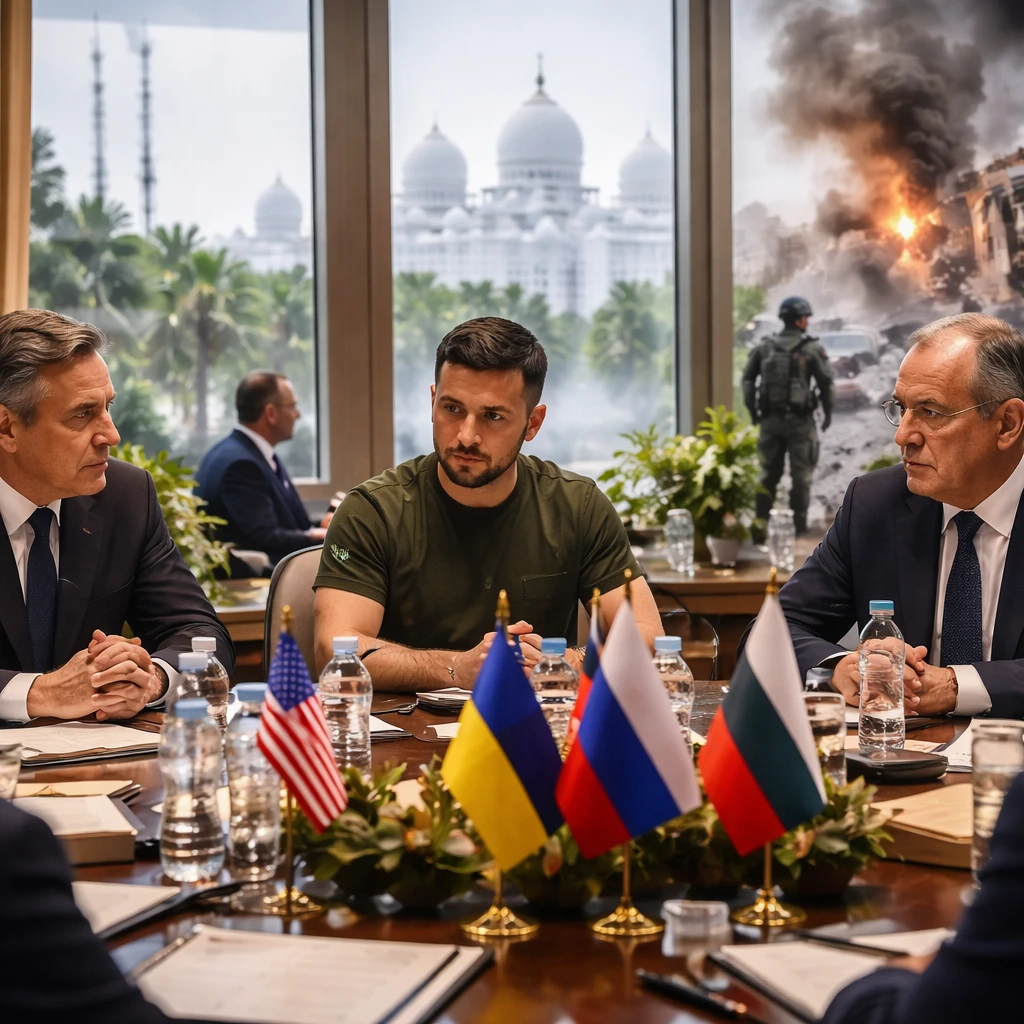

Diplomatic efforts to negotiate an end to the hostilities between Russia and Ukraine, brokered by the United States, will move forward this week following a short postponement, according to a senior official from the Kremlin on Monday. These discussions are set to occur in Abu Dhabi, where a prior meeting took place last month, highlighting ongoing attempts to break the impasse despite the continuation of active fighting on the front lines and destructive long-range strikes targeting rear positions.
The trilateral talks involving Russia, Ukraine, and the U.S. will be conducted over two days, Wednesday and Thursday. Russian government spokesperson Dmitry Peskov confirmed the schedule and indicated the previous delay was due to conflicts in arranging the timing. Ukrainian President Volodymyr Zelenskyy announced that his government will be sending representatives to participate in the negotiations, which were originally planned for the past weekend.
Over the last year, efforts spearheaded by the U.S. administration have sought to encourage both parties to reach concessions; however, sustained deadlock on the fundamental issues continues as the conflict approaches four years. Peskov characterized the dialogue as complex. In his remarks to media, he acknowledged some progress where conversations have facilitated partial common ground, but also emphasized that significant challenges remain.
Recently, Russian presidential envoy Kirill Dmitriev engaged in talks with U.S. officials near Miami, Florida, but Russian authorities have not disclosed details about these exchanges. A critical point of contention revolves around the status of territories currently under Russian control, notably in Ukraine’s industrially significant eastern region, with Russia insisting on retaining these lands and seeking further areas they have not successfully occupied.
Meanwhile, hostilities persist with Russian drones and missile strikes continuing to target civilian areas in Ukraine. A recent attack led to the death of 12 miners traveling by bus, exemplifying the lethal impact of these assaults. Additionally, the Ukrainian power grid has suffered extensive damage, resulting in widespread shortages of heating, electricity, and water during severe winter conditions.
In response to concerns about technological aid to Russian military operations, Ukraine’s Defense Minister Mykhailo Fedorov disclosed measures to prevent Russian forces from utilizing Starlink satellite internet services to guide their drones. He requested SpaceX, the company operating Starlink, to help restrict Russian use of the network within Ukraine. The Ukrainian government is requiring all civilian and military Starlink users to register their equipment to a central database, enabling the deactivation of unauthorized devices within Ukraine’s territory. Elon Musk, CEO of SpaceX, commented that initial efforts appear effective but remains open to further assistance if necessary.
These developments occur as international stakeholders seek pathways to peace while confronting persistent violence and logistical obstacles on both sides of the conflict.