
U.S. Military Continues Strikes on Alleged Drug Smuggling Vessels in Eastern Pacific
December 29, 2025
News & Politics

U.S. Military Continues Strikes on Alleged Drug Smuggling Vessels in Eastern Pacific

Operations Intensify Amid Drug Trafficking Crackdown and Regional Military Buildup

Summary

The U.S. military has recently carried out another offensive against a vessel involved in suspected narcotics smuggling in the eastern Pacific Ocean, resulting in two deaths. This incident adds to a series of approximately 30 known strikes on similar boats since early September, with over 100 fatalities reported. These efforts coincide with a broader strategy involving increased military presence near Venezuela, targeting drug trafficking and linked political figures.

Key Points

The U.S. military has conducted about 30 strikes on vessels in the eastern Pacific suspected of narcotics trafficking since early September, resulting in at least 107 fatalities.
The strikes form part of a broader U.S. strategy, including increased military deployment near Venezuela, focusing on drug interdiction and political pressure against President Nicolás Maduro, who faces narcoterrorism charges in the U.S.
The Trump administration expanded tactics in December by seizing sanctioned oil tankers near Venezuela, prompting some vessels to change routes, amid ongoing geopolitical tensions and drug trafficking concerns.

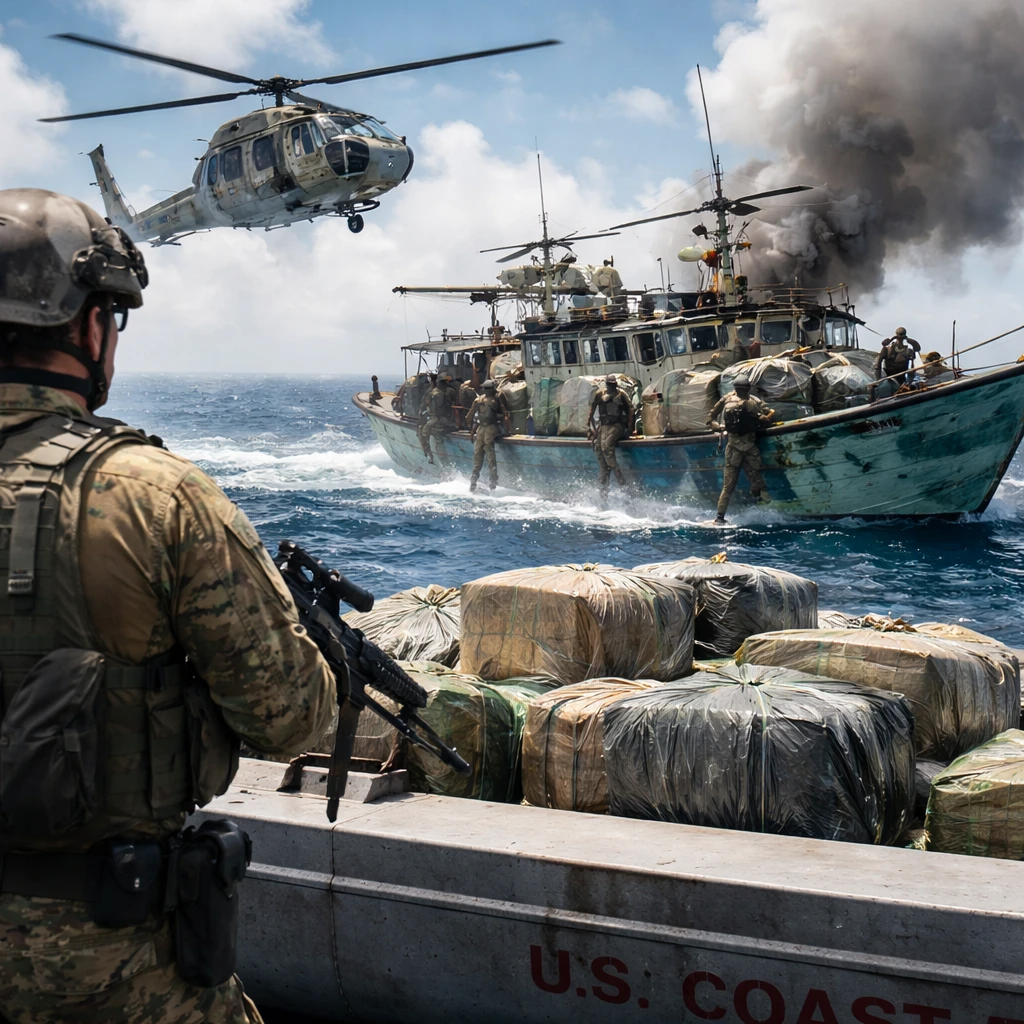
On Monday, the United States military disclosed an additional operation targeting a boat accused of engaging in drug trafficking activities in the eastern Pacific Ocean. The assault resulted in the death of two individuals, according to a statement from the U.S. Southern Command distributed through social media channels.

This recent action marks one among roughly 30 documented strikes on vessels allegedly involved in narcotics operations since early September, tallying a confirmed death count of at least 107 people, as reported by the current U.S. administration. The military categorically stated that the vessel attacked was participating in drug smuggling; however, it did not supply evidence to substantiate the claim.

Accompanying the announcement, a video posted online depicted a boat navigating the water before being hit by two detonations. President Donald Trump has defended these strikes as essential measures to curb drug flow into the United States, articulating that the nation is in an “armed conflict” with drug cartels.

Simultaneously, the administration has bolstered military forces in the region as part of heightened pressure targeting Venezuelan President Nicolás Maduro. Maduro has been formally indicted in the U.S. on charges related to narcoterrorism, intensifying geopolitical tensions in the area.

When questioned by journalists about a recent explosion in Venezuela, President Trump confirmed that U.S. forces had targeted a dock facility commonly utilized for loading boats suspected of carrying illicit drugs. Speaking during a meeting with Israeli Prime Minister Benjamin Netanyahu in Florida, Trump remarked, “There was a major explosion in the dock area where they load the boats up with drugs.” The White House and Pentagon have not released additional information regarding this incident.

In December, the administration adopted a new method by seizing two oil tankers sanctioned by the U.S. near Venezuela's coast, with pursuit of a third vessel underway. This strategy has contributed to some sanctioned tankers diverting from Venezuelan ports. Maduro contends that the underlying objective of U.S. military operations is to remove him from power, a claim underscored by President Trump's prior insinuations of possible land-based strikes within Venezuela or other countries.

The military’s campaign targeting suspected drug smuggling boats has encountered scrutiny from lawmakers, particularly following revelations concerning an early September strike that included a follow-up attack on survivors clinging to wreckage after the initial assault.

Risks
  • Escalation of military actions in the region could worsen diplomatic relations between the U.S. and Venezuela, impacting regional stability and energy markets reliant on Venezuelan oil exports.
  • The campaign’s aggressive strikes on drug trafficking could provoke retaliatory measures or increase volatility in maritime trade routes, potentially affecting transportation and logistics sectors.
  • Scrutiny and criticism from lawmakers concerning the morality and legality of strikes, especially following incidents involving survivors, might lead to policy shifts or constraints on military operations affecting operational planning.
Disclosure
This article provides information based solely on statements and data released by official U.S. military and government sources without independent verification of claims or evidence beyond those published. No new factual assertions beyond provided statements are included.
Search Articles
Category
News & Politics

News & Politics

Related Articles
FDA Initiates Review of BHA Food Additive Safety

The U.S. Food and Drug Administration (FDA) has announced plans to conduct a comprehensive reassessm...

Partisan Divide Deepens as White House Excludes Democratic Governors from NGA Meeting

The longstanding bipartisan forum of the National Governors Association (NGA) is facing disruption a...

Using Fireplace Ashes in Your Garden: Benefits and Considerations

Amidst a notably cold winter leading to increased fireplace use, many homeowners are seeking sustain...