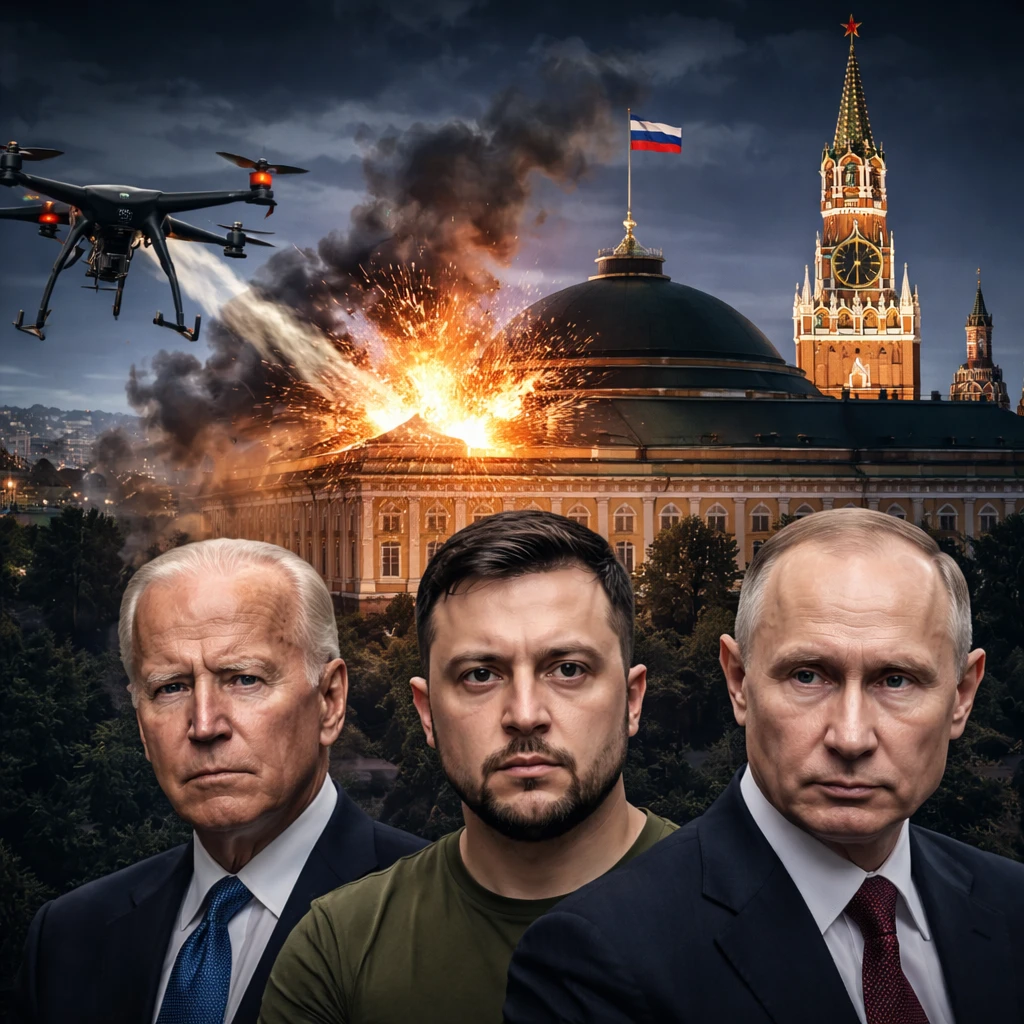

During a flight aboard Air Force One, President Donald Trump disclosed on Sunday that US national security entities have concluded Ukraine did not orchestrate a drone strike against a residence connected to Russian President Vladimir Putin. This evaluation challenges earlier Kremlin statements which claimed the attack occurred and was thwarted by Russian defense systems.
Last week, Russian Foreign Minister Sergey Lavrov asserted that Ukraine released a wave of drones targeting Putin’s official state residence located in the Novgorod region in northwestern Russia. Lavrov further condemned Kyiv for conducting the alleged attack amidst critical negotiations aimed at resolving the ongoing war.
The timing of these allegations coincided with Ukrainian President Volodymyr Zelenskyy’s visit to Florida to confer with President Trump about the US administration’s evolving 20-point framework designed to facilitate a resolution to the conflict. Zelenskyy promptly denied involvement in any such attack.
On Sunday, while returning to Washington after a two-week stay in Florida, President Trump expressed skepticism about the strike, stating, "I don’t believe that strike happened." His remarks followed statements from European officials who viewed the Russian claims as a strategic move by Moscow to destabilize ongoing peace efforts.
Initially, Trump seemed to accept the Kremlin's version of events, mentioning last Monday that Putin had raised the issue during a telephone conversation between the two leaders. At that time, Trump conveyed a sense of anger regarding the allegation.
However, by midweek, Trump’s position shifted. He shared a New York Post editorial on his social media platform voicing doubt over Russia’s accusations and criticizing Putin for prioritizing “lies, hatred, and death” during a moment the US President described as an unprecedented opportunity to advance peace discussions between the conflicting parties.
Previously during his campaign, President Trump had pledged to swiftly end the war in Ukraine, a promise he has yet to fulfill as the intense conflict continues. His mediation efforts have been met with frustrations directed at both Zelenskyy and Putin, as he navigates complex negotiations aimed at achieving an equitable ceasefire.
Both Trump and Zelenskyy reported progress following their talks at Trump’s Mar-a-Lago resort concerning the 20-point plan. Nonetheless, Russian President Putin appears disinclined to pursue peace until Russia’s objectives are fully met. Among these objectives are securing control over all Ukrainian-held territories in the strategic Donbas industrial region and imposing strict limitations on Ukraine’s post-conflict military capabilities, including the size and types of weaponry allowed.