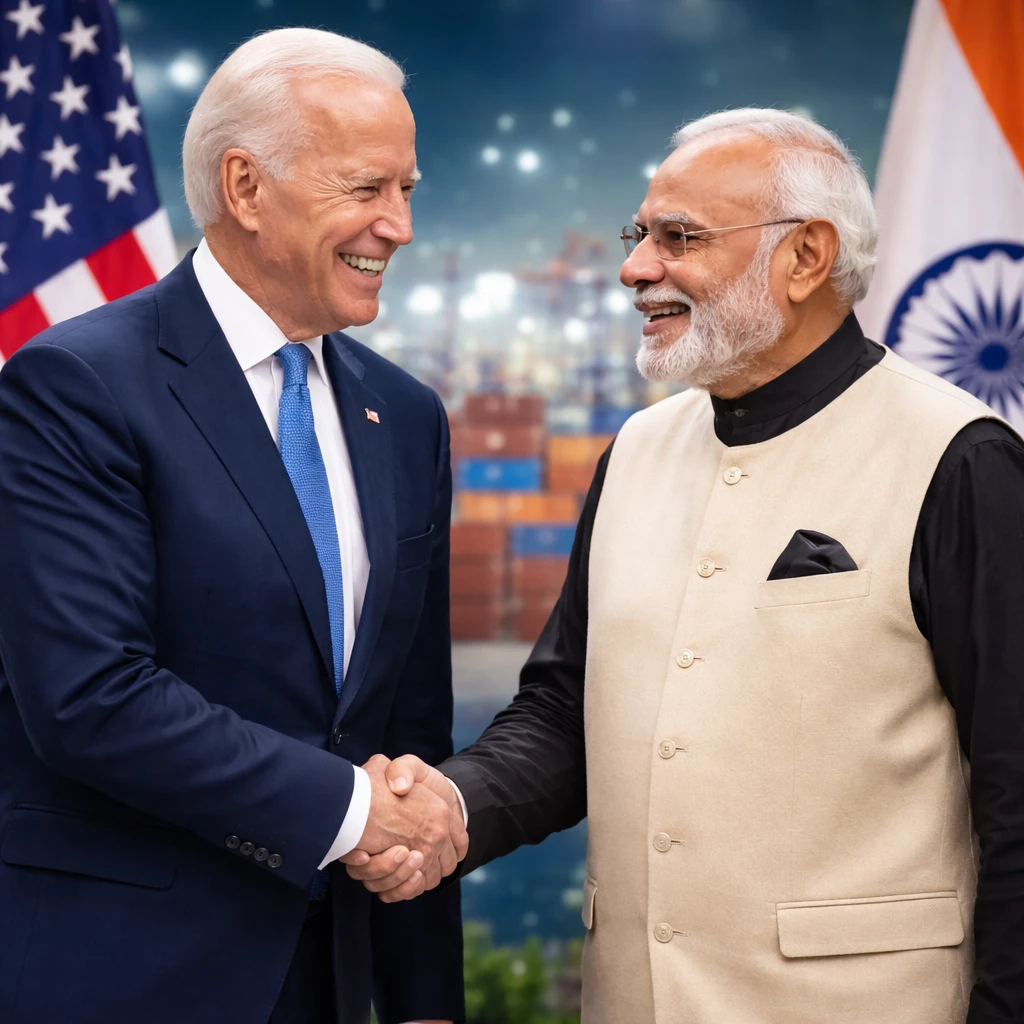

In a recent development highlighting shifts in international trade and geopolitical alignment, the President of the United States declared on Monday his intention to reduce tariffs imposed on Indian products from the current 25% to 18%. This decision comes on the heels of India's commitment to cease the purchase of Russian petroleum, a critical element in the broader economic measures aiming to isolate Russia following its invasion of Ukraine in February 2022.
Washington's move, according to the President, responds to sustained diplomatic pressure to encourage India to diminish its reliance on discounted Russian crude oil — a resource that India has capitalized upon amidst global sanctions targeting Moscow. Alongside the tariff reduction, it's anticipated that India will also systematically eliminate import taxes on American goods, enhancing bilateral trade with commitments to purchase approximately $500 billion worth of products from the United States.
The President expressed optimism that these developments could contribute to ending the ongoing conflict in Ukraine, which he described as causing thousands of deaths weekly. His remarks were disseminated through his social media platform, underscoring the linkage between economic policies and conflict resolution strategies.
Echoing these sentiments, India's Prime Minister took to social media platform X to express his approval of the tariff rollbacks, emphasizing the pivotal role of American leadership in maintaining global peace, stability, and prosperity. Modi indicated eagerness to deepen bilateral cooperation and elevate the partnership to unprecedented levels.
Despite a history of amicable relations between the two leaders, recent tensions related to the Ukraine war and trade disagreements had strained interactions. The US President has faced challenges fulfilling campaign promises to swiftly end hostilities in Ukraine, with a cautious approach towards applying pressure on the Russian leadership.
Concurrently, the administration has utilized unilateral tariff impositions without congressional approval to advance its economic and foreign policy objectives. The announcement of the rapprochement with India is timely, coinciding with preparations for forthcoming trilateral talks in Abu Dhabi involving US envoys and representatives from Russia and Ukraine aimed at brokering peace.
The President's strategic stance prioritizes targeting Russia's oil revenues as a pathway to ending the nearly four-year conflict. His tariff policy had previously levied a 25% duty on Indian imports in June, attributed to India's insufficient efforts to reduce its trade surplus with the United States and open its markets. August saw an additional 25% tariff applied in response to India's ongoing purchases of Russian oil, effectively doubling the rate to 50%.
With India's commitment to halt Russian oil acquisition and the revision of tariff rates to 18%, the duties on Indian goods would approach the levels imposed on exports from the European Union and Japan, set around 15%. Historically, Russia's relationship with India has focused more heavily on defense equipment than on energy supplies. Although Russia supplies a relatively small portion of India's crude, it is a significant provider of military hardware.
Post-invasion, India leveraged discounted Russian oil purchases to bolster its energy reserves while aiding Moscow's efforts to sustain its war economy. The tariff easing also follows closely on the heels of a landmark free trade agreement between India and the European Union, which, after nearly two decades of negotiation, promises expansive market access affecting around 2 billion people with liberalized trade in textiles, pharmaceuticals, and reductions in import taxes on goods such as wine and automobiles.
This EU-India accord reflects a mutual interest in diversifying trade partnerships beyond the United States, especially following the impact of US tariff hikes that disrupted established flows. While these tariffs have predominantly burdened American businesses and consumers, they also have the potential to curtail trade volumes between the nations.
India has accelerated efforts to formalize multiple trade agreements recently, including concluding deals with Oman and reaching negotiation milestones with New Zealand.
Social media interactions suggest positive diplomatic communications between the US President and Prime Minister Modi, including a shared photograph featured in a magazine cover. A previous February meeting saw discussions around India increasing imports of US oil and liquefied natural gas, though progress was initially hindered by trade frictions.
Washington's aim remains zero tariffs on almost all US exports; however, India has been cautious about opening sensitive sectors like agriculture and dairy products, key to the livelihoods of a substantial portion of its populace. Data from the US Census Bureau indicated a trade deficit of $53.5 billion with India in goods over the initial 11 months of the previous year, reflecting greater American imports from India than exports.
India, the world's most populous country with over 1.4 billion residents, is increasingly viewed by government officials and business leaders alike as a geopolitical and economic counterbalance to China.