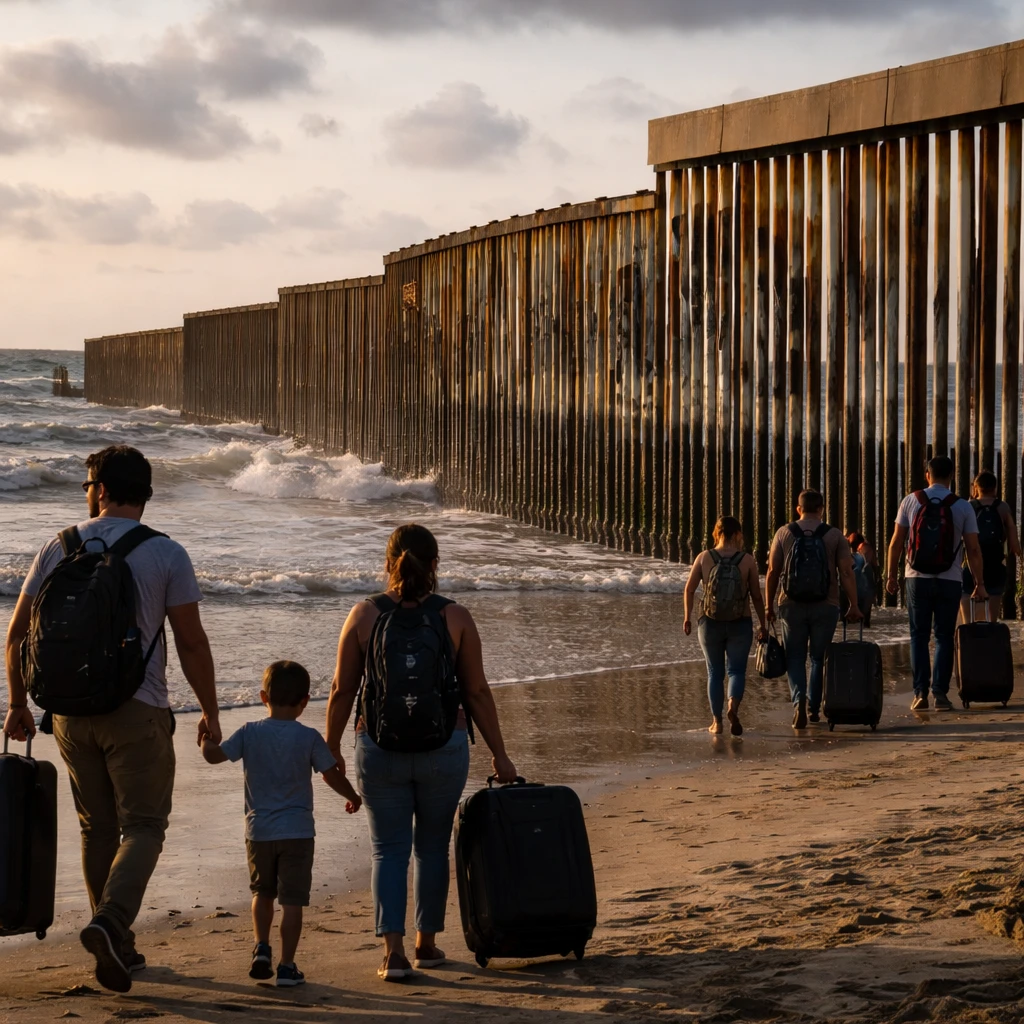

In 2025, the United States saw a significant reduction in its population growth rate, with the nation's population approaching 342 million. This information is drawn from new estimates released by the U.S. Census Bureau, which highlight the stark contrast to the previous year's growth performance.
During 2024, the country experienced a population increase of nearly 1%, a rate that marked the highest level recorded in the past twenty years. The growth in 2024, which brought the population to approximately 340 million, was largely propelled by a surge in immigration numbers.
However, the following year experienced a pronounced slowdown. The 0.5% growth rate for 2025 reflects a substantial decrease, directly linked to President Donald Trump's immigration policies that tightened restrictions and curbed the inflow of new immigrants.
In numerical terms, immigration contributed an addition of about 1.3 million people in 2025, compared to the almost 2.8 million immigration-driven increase in 2024. The Census Bureau projects that if this trend persists, by mid-2026, annual immigrant gains could fall drastically to close to 321,000. It should be noted that these estimates amalgamate both legal and unauthorized immigration without differentiation.
Looking at historical data over the last 125 years, the lowest population growth was noted in 2021 amid the COVID-19 pandemic, when the rate dipped to 0.16%, with a total increase of 522,000 people. Immigration that year was significantly limited due to travel restrictions, dropping to an increase of roughly 376,000 entrants. The only other recorded period with a comparable low growth was in 1919, during the Spanish flu outbreak, where the growth rate was just below 0.5%.
Regarding natural population changes, births exceeded deaths by 519,000 people in 2025. Though this positive natural increase is higher relative to the low pandemic years at the start of the decade, it remains substantially less robust than during the 2000s, a period when the natural increase ranged between 1.6 and 1.9 million annually.
This reduction in immigration has impacted population growth across various states known as traditional destinations for immigrants. These demographic shifts have contributed to slower growth rates in regions that previously experienced robust increases driven by newcomer populations.