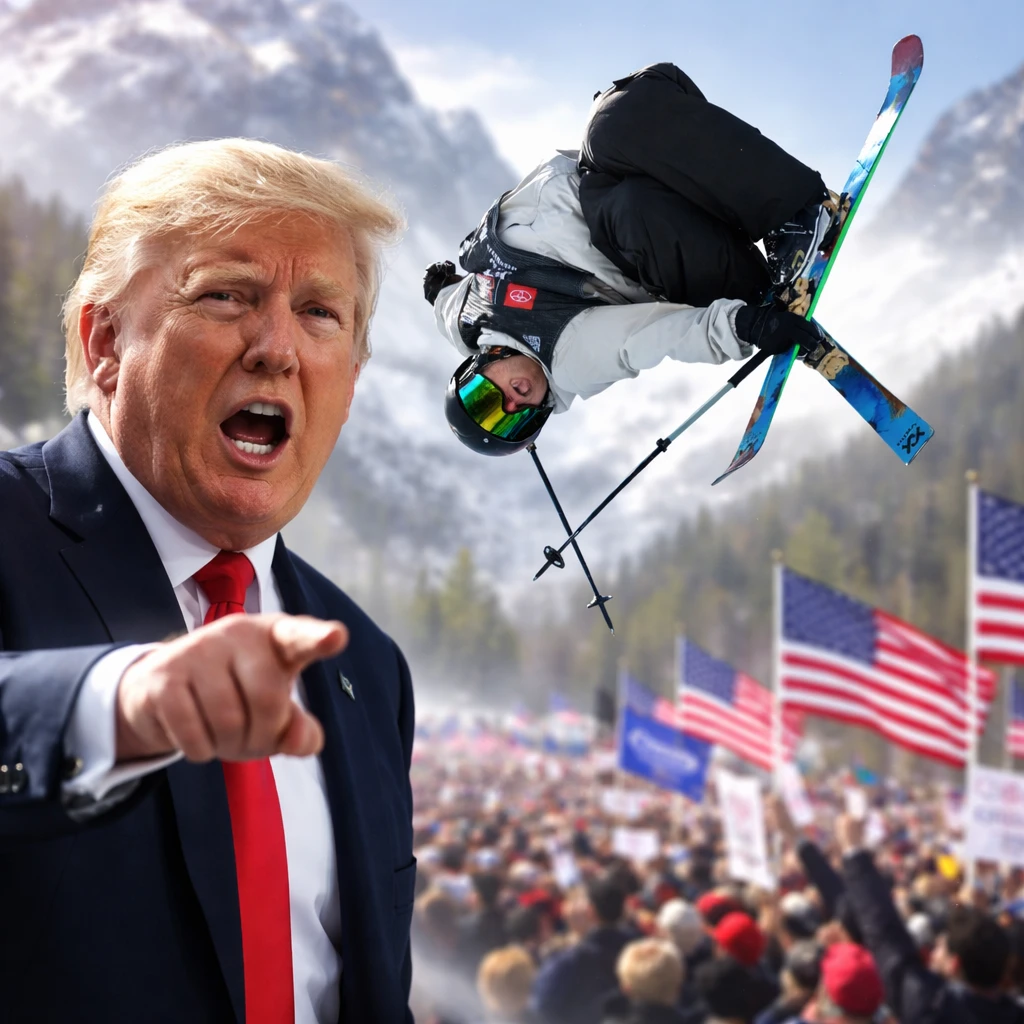

During the recent Winter Olympic Games held in Milan and Cortina, tensions surfaced as American athletes openly discussed their dissent concerning policies implemented by the United States administration. The focus has been particularly on immigration enforcement actions that have intensified under former President Donald Trump's tenure.
Freestyle skier Hunter Hess made notable remarks during a press conference where reporters inquired about the athletes' feelings representing the U.S. amidst the heightened immigration enforcement policies. Hess conveyed conflicted emotions, expressing that although he competes under the American flag, his personal values do not completely align with current governmental stances. "If it aligns with my moral values, I feel like I’m representing it," Hess explained, emphasizing that his participation in the Games symbolizes support for those who helped him reach this stage rather than endorsing all facets of U.S. policy.
This commentary sparked immediate criticism, including from notable public figures such as Jake Paul, who emphasized a firm stance against athletes who appear unwilling to represent the country fully. On the social platform X, Paul urged that those unwilling to represent the U.S. should consider residing elsewhere. Despite his criticism, Paul was subsequently seen seated next to Vice President JD Vance at a U.S. women's hockey game in Milan, reflecting the intertwining of politics and sport during the event.
Former President Trump subsequently weighed in, labeling Hess a "real Loser" on Truth Social, claiming that his opposition to representing the country was a reason he should not have tried out or been included on the Olympic team. This comment contributed to an ongoing discourse about patriotism, representation, and freedom of expression among the athletes.
Other U.S. athletes expressed similar concerns. Freestyle skier Chris Lillis described feeling "heartbroken" by the actions of Immigration and Customs Enforcement (ICE) in the U.S., advocating for respect and dignity towards all citizens. U.S. figure skater Amber Glenn highlighted the difficulties experienced by the LGBTQ+ community under the current administration, particularly noting the personal repercussions she faced upon voicing her opinions, including significant online harassment and threats.
These expressions have not gone unnoticed nor unchallenged. Alongside Jake Paul, conservative public figures including former NFL quarterback Brett Favre, actor Rob Schneider, and U.S. Representative Byron Donalds voiced disapproval of the athletes’ remarks online. The backlash extended beyond public figures to ordinary Americans, with some athletes facing disturbing levels of hostility, prompting Glenn to consider reducing her social media engagement for mental health reasons.
Addressing the situation, the U.S. Olympic and Paralympic Committee (USOPC) issued a statement acknowledging the surge in abusive communications toward athletes and confirmed efforts to remove harmful content and refer serious threats to law enforcement agencies. The USOPC reaffirmed its support for Team USA athletes and its commitment to their safety and well-being both during and outside of competition.
Internationally, the political climate surrounding the U.S. administration has eroded some support for Team USA, attributed to aggressive foreign policy measures including tariffs, military involvement in Venezuela, and threats such as the proposed Greenland acquisition. During the Olympic opening ceremony, while the athletes received cheers, Vice President Vance and his spouse, second lady Usha Vance, were met with jeers and whistles from the audience as they appeared waving American flags.
In Milan, local protests have arisen against the deployment of ICE personnel. These protests intensified despite clarifications that the officers present are from Homeland Security Investigations, a division distinct from the enforcement-focused ICE units engaged in immigration crackdowns within the U.S. These officers assist in security roles during international events like the Olympics. Nonetheless, public demonstrations erupted, with thousands participating and some confrontations occurring between protesters and police, leading to use of tear gas and a water cannon. A prior protest also took place with hundreds demonstrating against ICE presence.