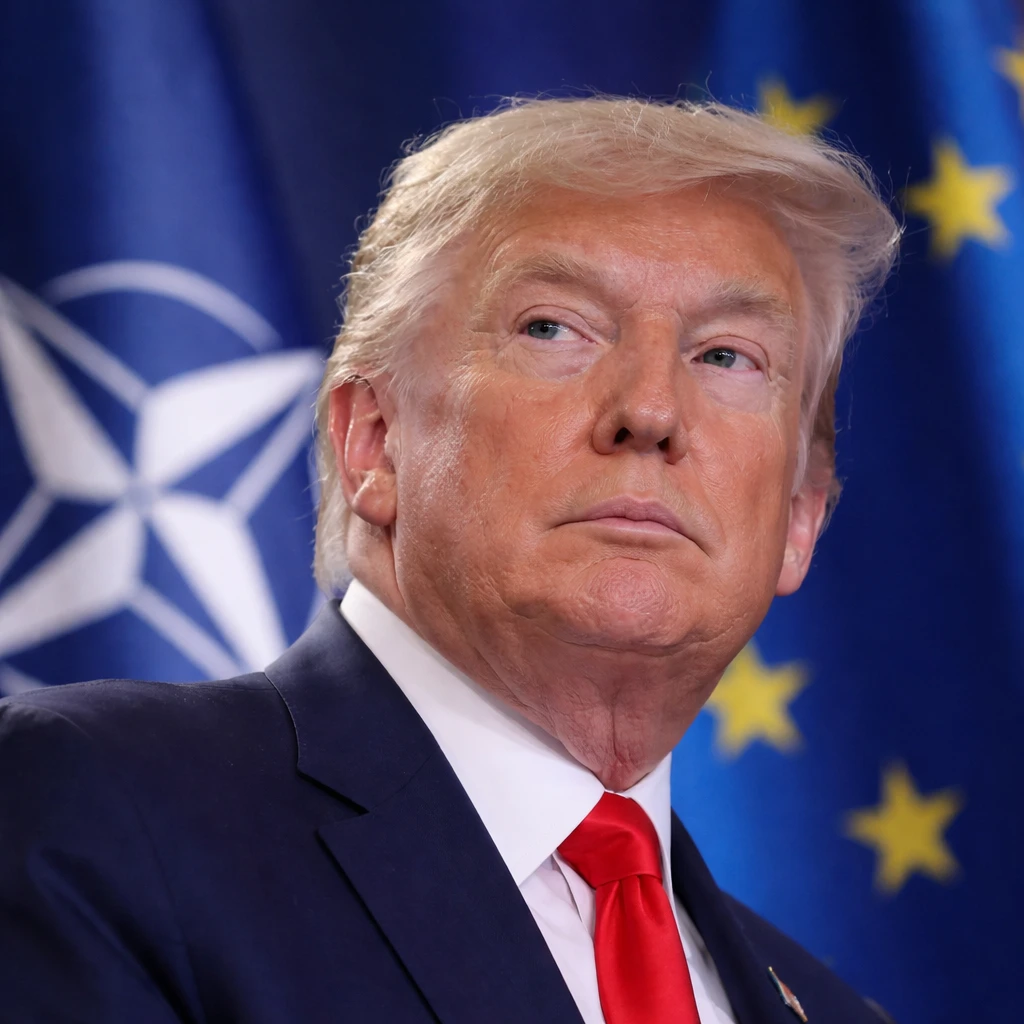

In Davos, Switzerland, recent developments have underscored palpable tensions between the United States and European allies regarding Greenland. President Donald Trump initially threatened steep tariffs on eight European nations that opposed his proposal to purchase Greenland from Denmark — a long-standing U.S. partner. This aggressive posture alarmed financial markets and NATO members alike, fueling fears of a potentially significant rupture in the transatlantic alliance that has been central to global security since World War II.
As Trump arrived in Davos to deliver a keynote address before global leaders at the World Economic Forum, financial markets recorded their most pronounced declines since October. Investors reacted strongly to the unfolding geopolitical strain, with concerns mounting over the broader implications of U.S. foreign policy and international cooperation.
During his address, Trump expressed visible frustration over the market dip, lamenting the United States' massive defense contributions to NATO and European countries. However, he notably moved away from his earlier threat to employ military force to acquire Greenland, stating firmly, "I won’t do that. OK?" This represented a significant softening after initial remarks suggested such an option was under consideration.
Hours later, Trump followed through on another policy reversal by withdrawing the planned tariffs. He revealed that he had reached an understanding with NATO Secretary-General Mark Rutte on a "framework" related to Greenland that, in his view, secured all U.S. interests pending formal agreement. Speaking to CNBC near the close of the market, Trump portrayed this outcome as a "very good deal for the United States" and insisted that market instability was not the primary driver behind the tariff withdrawal but rather the progress made toward a deal.
Following Trump's statement, U.S. equity markets responded positively. The S&P 500 climbed 1.2%, recovering nearly half of the losses sustained earlier. Similarly, the Dow Jones Industrial Average and Nasdaq Composite also increased by 1.2%, reflecting investor relief at the de-escalation of threats and renewed diplomatic engagement.
While details of the proposed "framework" remain limited, Danish Foreign Minister Lars Løkke Rasmussen cautiously remarked that the situation ended more optimistically than it started, though specifics still require negotiation. Speculation within NATO discussions includes potential collaboration involving Denmark and the alliance to expand U.S. military presence in Greenland, according to a European official not authorized to publicly disclose details. However, it remains unclear whether this is part of the more recent agreement reached by Trump and Rutte during their Davos meeting.
On Fox News, Rutte underscored shared interests in securing the Arctic region, acknowledging the U.S. position on ongoing conversations with Denmark and Greenland to preclude Russian and Chinese economic or military incursions. His comments suggested continued diplomatic partnerships aimed at collective security, though refrained from elaborating on exact terms.
The U.S. internal political apparatus had also expressed concern over Trump's confrontational approach toward Greenland and NATO allies. Administration officials anonymously shared apprehensions that such rigidity could jeopardize other foreign policy initiatives, including the formation of a proposed Board of Peace that the president planned to highlight at Davos. Critics noted that Trump's fixation on Greenland, combined with indications he might accept a fracturing NATO alliance, complicated efforts to promote this new diplomatic body, which originated as a mechanism to address the Israel-Hamas Gaza ceasefire but had grown into a broader international endeavor. Some European countries reportedly declined participation following the tariff threats, viewing the board's expansive mandate with skepticism.
Experts analyzing these events noted divergent perspectives. Max Bergmann of the Center for Strategic and International Studies described Trump's tactics as bullying, emphasizing that firm resistance from European leaders defused the crisis, potentially stabilizing relations. Conversely, Matthew Kroenig of the Atlantic Council viewed the Greenland seizure threat as a strategic bluff that, despite generating fear, may have yielded concessions. Meanwhile, Daniel Fried, also from the Atlantic Council, acknowledged that the aggressive approach has inflicted unnecessary drama and harm, but believes the damage remains reparable. However, Fried cautioned that continuing on the prior path could have led to far more significant challenges.
Overall, the U.S. decision to rescind tariffs on European allies and forego military options for Greenland marks a noteworthy recalibration amid economic worries and diplomatic pushback. It highlights ongoing tensions within NATO and between global powers over strategic territories and the balance of cooperation versus confrontation in managing shared security interests.