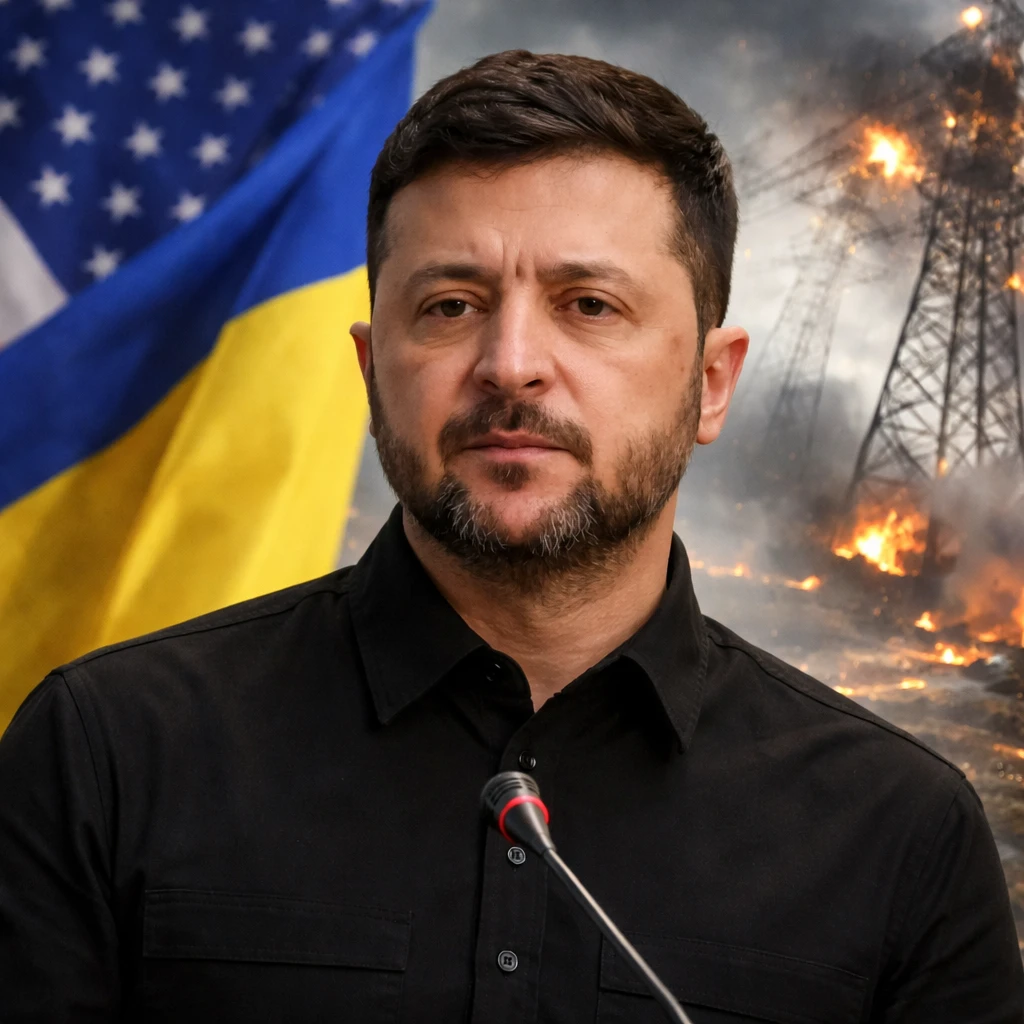

In a recent press briefing, Ukrainian President Volodymyr Zelenskyy revealed that the United States has presented Ukraine and Russia with a clear deadline targeting the beginning of this summer to finalize a peace deal to halt nearly four years of warfare. He emphasized that if this June deadline is not met, pressure from the former US administration, specifically the Trump era, will likely be applied to encourage both sides to comply.
Zelenskyy conveyed that American officials are advocating for an end to hostilities by early summer and are committed to ensuring adherence to this schedule, underscoring their intent to establish a transparent timeline for the entire negotiation and resolution process. This statement was initially given under embargo and made public on Saturday morning.
Further details include the United States’ proposal to conduct the upcoming round of trilateral peace talks within its territory, potentially in Miami. Ukrainian representatives have confirmed their participation in this session.
Additionally, Zelenskyy introduced a significant element of the ongoing negotiations: a $12 trillion economic package put forward by Russia. This sizable proposal, referred to as the “Dmitriev package” after Russian envoy Kirill Dmitriev, forms an integral part of the bilateral economic discussions embedded within the broader peace negotiation framework.
Concurrently, Ukraine faced another wave of Russian attacks targeting its energy infrastructure. Overnight Saturday, more than 400 drones and approximately 40 missiles were deployed against Ukrainian energy assets, including the electrical grid, power generation sites, and distribution networks, according to Zelenskyy’s report on social media platform X.
Ukrenergo, Ukraine’s state-run energy transmission operator, characterized this assault as the second substantial attack on the nation’s energy infrastructure this year. They reported that eight power generation facilities across eight different regions were struck. Due to missile strikes on critical high-voltage substations, which support the output of nuclear power units, all Ukrainian-controlled nuclear plants were forced to reduce their operational load. This has significantly increased power shortages nationwide and resulted in extended scheduled power outages across all regions.
These escalating attacks place additional strain on Ukraine’s energy and utility sectors, challenging the stability of electrical supply and essential services for civilians.
Regarding peace negotiations, the latest US-facilitated trilateral talks in Abu Dhabi concluded without resolution, as Ukraine and Russia continue to hold firm on opposing demands. Russia insists on Ukraine withdrawing from the Donbas region, an expectation Kyiv firmly rejects and has declared non-negotiable.
Zelenskyy remarked, “Difficult issues remained difficult,” reiterating Ukraine’s steadfast position on Donbas. He suggested that the most challenging topics will be reserved for direct meetings between national leaders. Moreover, he noted that no consensus was achieved on the future management of the Russian-held Zaporizhzhia nuclear power plant. Skepticism was also expressed about a US proposal to designate the Donbas as a free economic zone, given divergent views on such an arrangement.
He further explained that recent discussions included technical aspects of how a ceasefire would be monitored, with the US reaffirming its role in this process.
The ongoing Russian aerial bombardment campaigns have increasingly targeted Ukraine’s electrical grid in recent months, inflicting widespread blackouts and disrupting crucial heating and water services amid a harsh winter season, thereby amplifying pressure on Ukraine’s civilian population and infrastructure resilience.
President Zelenskyy indicated that the United States has renewed its proposal for a ceasefire that explicitly prohibits strikes on energy infrastructure. Ukraine has expressed its willingness to observe such a ceasefire contingent upon a reciprocal commitment from Russia. He recalled that a previous US-suggested week-long pause was breached by Moscow after only four days.