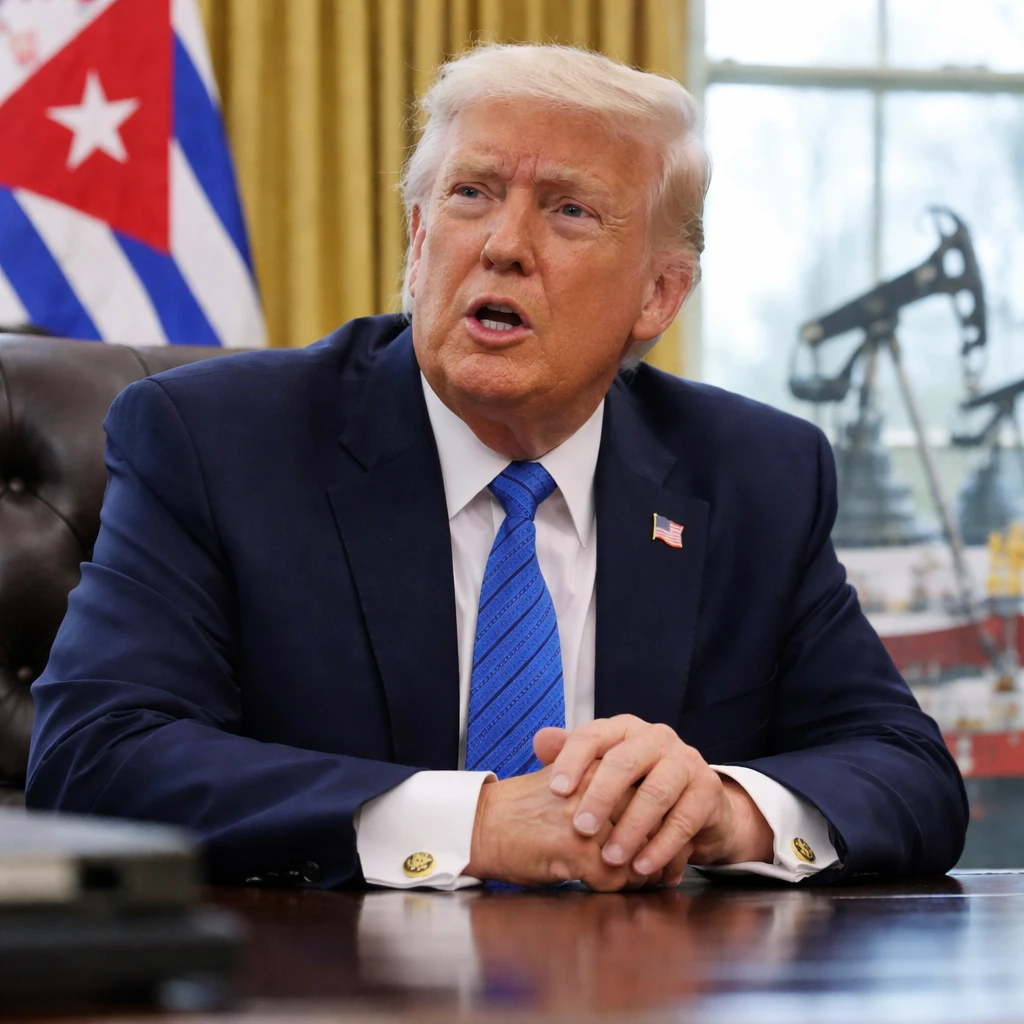
During a flight to Florida, President Donald Trump informed journalists that the United States has initiated discussions with Cuban authorities, coinciding with a broader effort by his administration to exert increased economic and political pressure on Cuba, which remains under a communist government. Trump's remarks came amid measures intended to restrict Cuba’s access to essential oil supplies.
In recent weeks, the administration has actively worked to disrupt Cuba's oil supply chain, focusing on imports primarily sourced from Venezuela and Mexico. Trump suggested on Saturday that such restrictions are designed to encourage Cuba to come to the negotiating table, although the specific objectives remain somewhat ambiguous.
The US government's intensified attention on Cuba follows the early January capture of Venezuela's then-President Nicolás Maduro. Since that event, the administration has adopted a more confrontational stance toward nations it considers adversaries, including Cuba.
While speaking to reporters aboard Air Force One, Trump claimed that the Cuban government is vulnerable to collapse but did not provide further details about the extent or nature of recent communications between the two governments. He succinctly stated, "we are starting to talk to Cuba," without elaborating on timings or content.
In conjunction with this new diplomatic approach, the administration has taken concrete policy actions. Most notably, Trump signed an executive order levying tariffs against countries that continue to sell or provide oil to Cuba. This policy implementation has put considerable pressure on Mexico, a key oil supplier to Cuba after US sanctions halted petroleum shipments from Venezuela following Maduro's ousting.
Mexican President Claudia Sheinbaum warned that such measures could precipitate a humanitarian crisis on the island. She indicated that Mexico would explore alternative methods to sustain aid to Cuba despite the new US sanctions.
Responding on Saturday, Trump stated that the situation does not have to escalate into a humanitarian emergency, speculating that Cuba might seek a deal with the United States. "So Cuba would be free again," he remarked, expressing optimism that an agreement would be reached and that negotiations would be conducted amicably.
While the developments indicate initial diplomatic engagement, the trajectory and broader goals of US-Cuba relations under this administration remain to be fully defined.