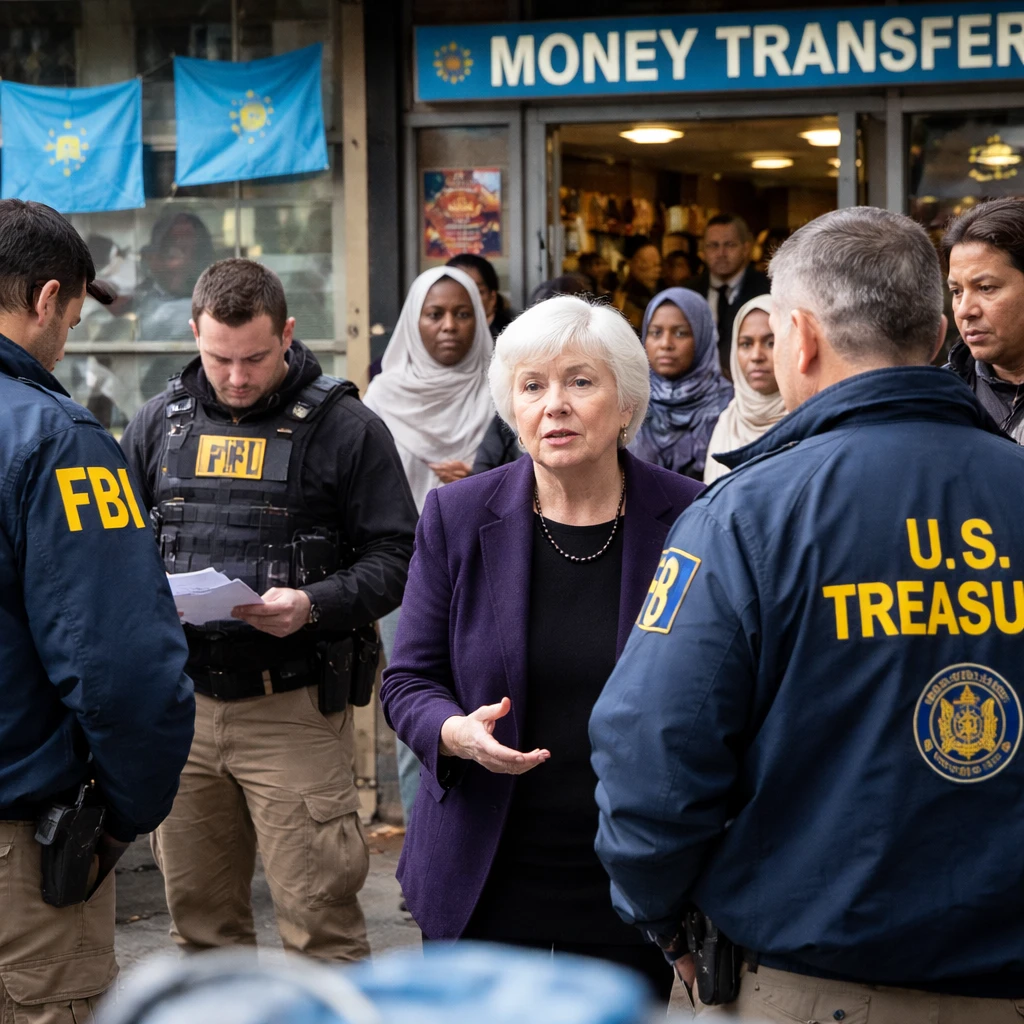

During a visit to Minnesota, Treasury Secretary Scott Bessent disclosed that the department has increased its investigation of financial transactions between Minnesota residents and businesses and counterparts in Somalia. This effort advances federal immigration enforcement measures intensified in the state, particularly concerning the Somali diaspora.
Bessent revealed that Treasury has initiated multiple actions aimed at fraud reduction, including probes into four companies used for sending money abroad—though the secretary did not identify these firms. His presence in Minnesota coincided with public unrest in Minneapolis following an incident in which an Immigration and Customs Enforcement agent fatally shot a woman in a neighborhood near the city center, aggravating tensions between federal and local authorities.
This crackdown aligns with directives from President Donald Trump, who has singled out Minnesota's Somali community within the predominantly Democratic state for immigration enforcement. The president’s administration has expressed intentions to uncover fraudulent activities linked to this community. The Treasury made public last month its plan to focus on financial service providers handling remittances to Somalia.
The department's intensified surveillance partly follows major fraud cases, including allegations against a nonprofit organization, Feeding Our Future, accused of misappropriating pandemic relief funds intended for school meal programs. Prosecutors estimate the financial losses in this case to total approximately $300 million.
Governor Tim Walz, who recently ended his campaign for a third term, emphasized Minnesota's dedication to combating fraud. He stated that his administration would continue collaborating closely with federal agencies to ensure fraud prevention and apprehension of perpetrators. Facing criticism from political opponents, Walz condemned the Feeding Our Future scheme and expressed strong anger at criminals exploiting systems designed to aid children.
Aimee Bock, the founder of Feeding Our Future, faced multiple felony charges including conspiracy, wire fraud, and bribery, and was convicted earlier this year, notwithstanding her claims of innocence.
While declining to discuss specific cases, Bessent indicated that he met with several financial institutions in Minnesota, urging them to strengthen fraud prevention protocols. However, the Treasury has refrained from revealing the identities of these institutions. Key measures rolled out include investigations by the Financial Crimes Enforcement Network targeting local money service businesses, stricter reporting mandates for international money transfers from Hennepin and Ramsey counties, and guidance provided to financial entities regarding fraud identification linked to child nutrition funding.
“The Treasury is committed to deploying every available resource to eradicate this severe and unchecked fraud and ensure those responsible are held accountable,” Bessent said during his remarks. Nonetheless, his announcements have faced criticism from some quarters. Nicholas Anthony, a policy analyst at the libertarian Cato Institute, labeled the initiatives as extending a "legacy of financial surveillance and control." He cautioned that restricting money outflows from Americans and expanding surveillance under the Bank Secrecy Act warranted condemnation.
Local Somali leaders have reported anecdotal incidents of community members detained by federal agents, though limited details have emerged. These community advocates, alongside officials such as Governor Walz and Minneapolis Mayor Jacob Frey, have pledged to shield the Somali population from undue harm.
Addressing an audience at the Economic Club of Minnesota, Bessent spoke broadly about the administration's economic policies and referenced the fraud investigation efforts. Without direct mention of the Somali community, he underscored the Treasury’s dedication to recovering illicitly obtained funds, prosecuting offenders, and preventing future embezzlement, aiming to replicate efforts nationwide on a state-by-state basis.