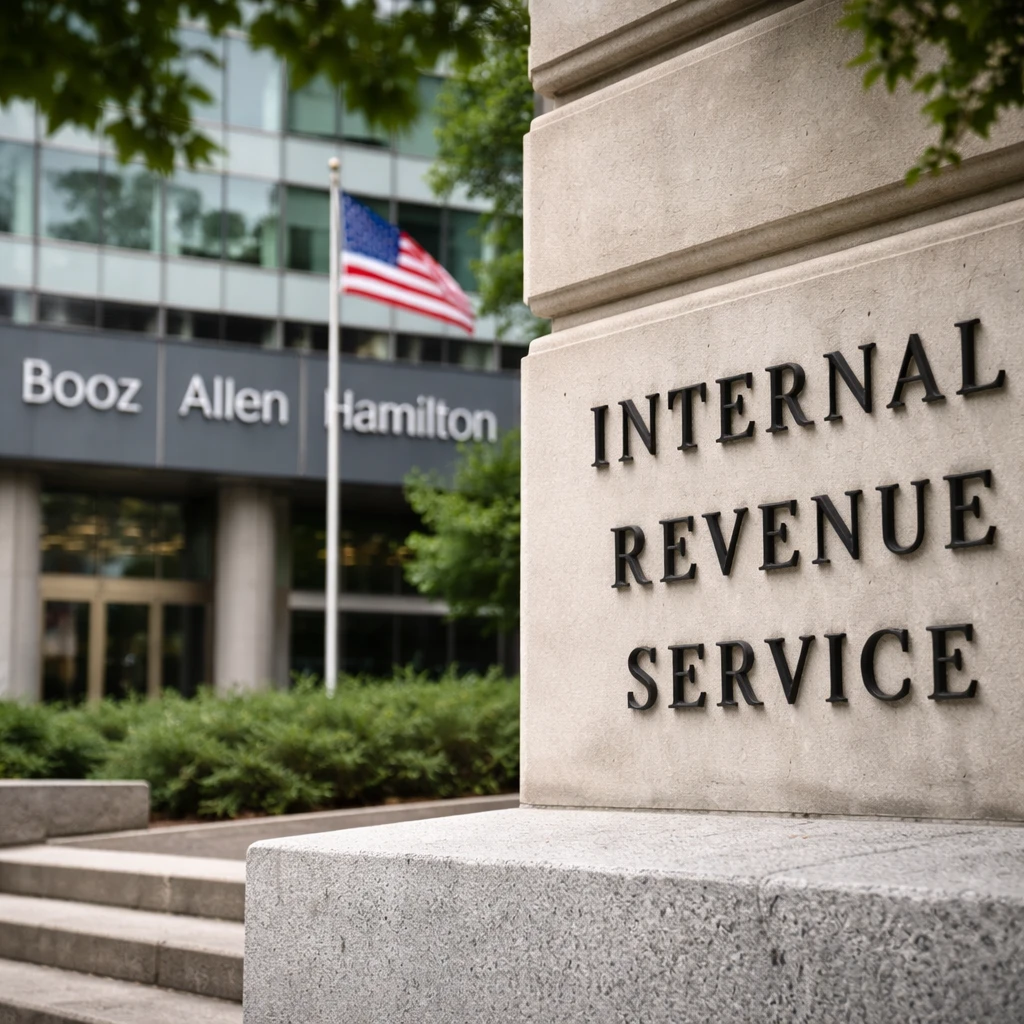

U.S. Treasury Terminates Contracts with Booz Allen Hamilton Following Tax Data Leak Incident
January 26, 2026
News & Politics

U.S. Treasury Terminates Contracts with Booz Allen Hamilton Following Tax Data Leak Incident

After a former contractor's conviction for leaking tax records of high-profile individuals, Treasury cuts ties with Booz Allen while firm retains other government contracts

Summary

The U.S. Treasury Department has severed its contractual relationships with Booz Allen Hamilton after a former contractor employed by the firm was prosecuted and imprisoned for unauthorized disclosure of sensitive tax information involving President Donald Trump and other wealthy figures. Despite this action, Booz Allen continues to hold significant contracts with multiple federal agencies. The incident highlights concerns around data security safeguards within government contractors and the risks to firms heavily engaged in federal work.

Key Points

The U.S. Treasury Department terminated contracts with Booz Allen Hamilton following a breach involving leaked tax data of high-profile individuals.
Charles Edward Littlejohn, a former IRS contractor working under Booz Allen, was sentenced to five years in prison for leaking sensitive tax information.
Despite the Treasury’s action, Booz Allen retains multiple substantial contracts with other federal agencies, highlighting its ongoing role in defense and national security sectors.

In a decisive response to a recent breach of confidential tax information, the U.S. Treasury Department has ended its contracts with Booz Allen Hamilton. This step comes after Charles Edward Littlejohn, a former contractor connected to the firm, was sentenced to five years in prison for leaking tax documents concerning several of the nation's richest citizens, including then-President Donald Trump.

The leak, which unfolded over the period from 2018 to 2020, involved disclosures to prominent news organizations such as The New York Times and ProPublica. Prosecutors described the scale and nature of these leaks as "unparalleled" in the IRS’s history. Court filings further revealed that Littlejohn had intentionally sought a contracting role to access and extract Trump’s tax returns by devising careful methods to avoid detection within the IRS.

Booz Allen Hamilton, a leading defense and national security technology provider headquartered in McLean, Virginia, currently holds numerous contracts with various government bodies, including the Department of Defense, Homeland Security, and intelligence agencies. Despite losing Treasury contracts—31 agreements valued at $4.8 million annually and with total obligations of $21 million—the company maintains a sizable presence across federal agencies.

Treasury Secretary Scott Bessent criticized Booz Allen for failing to implement adequate security measures to protect sensitive taxpayer data accessed through contracts with the IRS. In response, Booz Allen spokesperson Brian P. Hale emphasized the firm's repudiation of Littlejohn’s illegal actions and its zero tolerance policy for such violations. According to Hale, the company fully cooperated with the government throughout the investigation, which culminated in Littlejohn's prosecution, and Booz Allen looks forward to ongoing discussions with Treasury regarding the situation.

Importantly, Booz Allen stated that it does not store taxpayer information on its own systems and lacks oversight capabilities over government network activity. Market reactions followed the announcement, with Booz Allen shares dropping from $102 per share on Friday to $91 and continuing to decline on Monday. The firm’s recent SEC filing cited risks including any damage to relationships with the federal government or damage to the firm’s professional reputation, especially due to negative publicity surrounding government contractors.

Risks
  • Security vulnerabilities in government contractor operations can lead to significant contract losses and reputational damage, as evidenced by Booz Allen's termination by Treasury.
  • Negative publicity and perceived lapses in safeguarding confidential government data present ongoing risks to firms deeply embedded in federal contracting, potentially affecting share prices and market confidence.
  • The situation underscores operational risks within the government technology and consulting sector, particularly concerning the handling of sensitive information and compliance with data protection requirements.
Disclosure
This article contains no material conflicts of interest or financial ties to the entities discussed.
Search Articles
Category
News & Politics

News & Politics

Related Articles
FDA Initiates Review of BHA Food Additive Safety

The U.S. Food and Drug Administration (FDA) has announced plans to conduct a comprehensive reassessm...

Partisan Divide Deepens as White House Excludes Democratic Governors from NGA Meeting

The longstanding bipartisan forum of the National Governors Association (NGA) is facing disruption a...

Using Fireplace Ashes in Your Garden: Benefits and Considerations

Amidst a notably cold winter leading to increased fireplace use, many homeowners are seeking sustain...