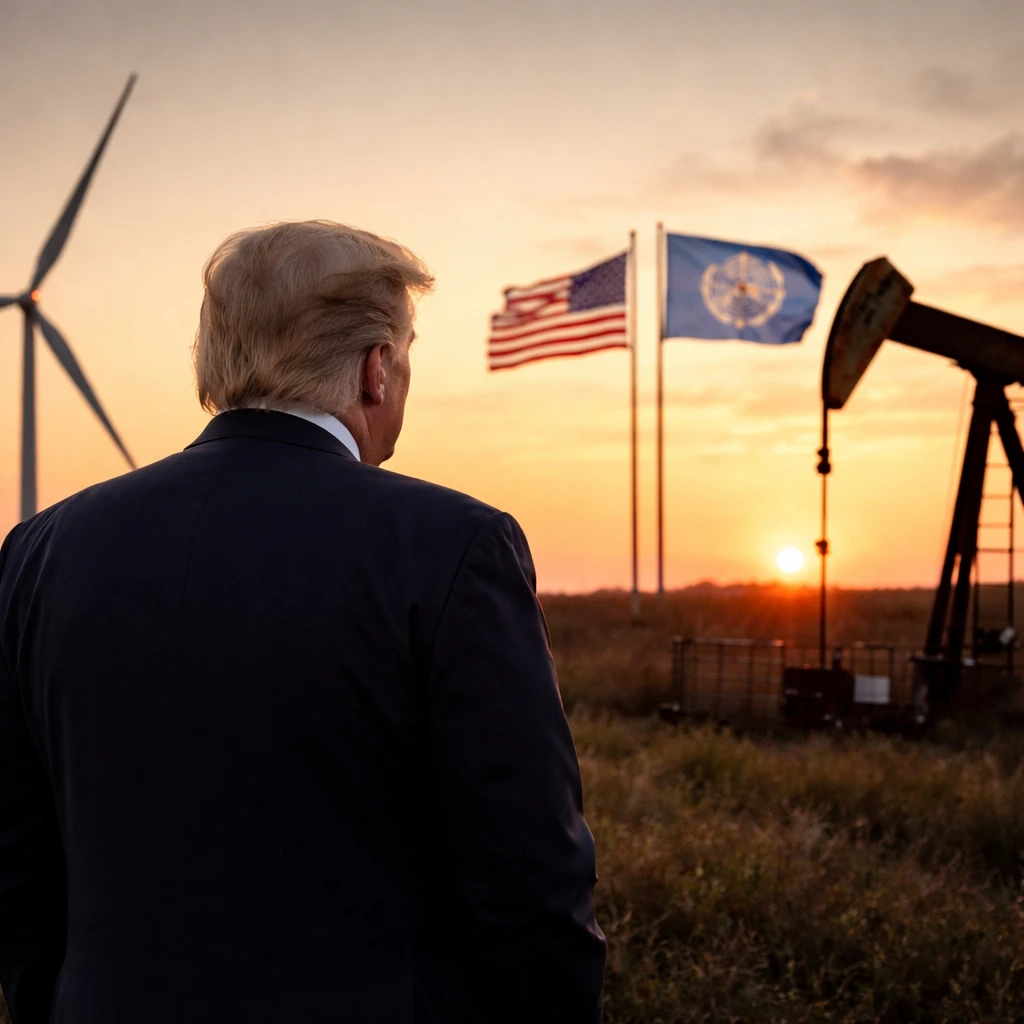

The United States has embarked on formally removing itself from the United Nations Framework Convention on Climate Change (UNFCCC), further distancing the country from international climate efforts and raising alarms about the possible consequences for both the nation and the world as environmental risks mount. This action represents a more significant withdrawal than previous steps taken under this administration, including pulling out of the Paris Agreement.
Established in 1992 at a conference in Brazil and initially led by then-President George H.W. Bush, the UNFCCC has served as the chief platform for negotiating, monitoring, and enforcing global climate commitments. Successive administrations, including those of Presidents Barack Obama and Joe Biden, have relied on the UNFCCC framework to engage in international climate accords like the Paris Agreement, notably without requiring Senate ratification. In addition to exiting the UNFCCC itself, the current administration also withdrew from a UN climate science panel, efforts to preserve biodiversity, the Green Climate Fund aimed at supporting developing countries, and multiple other environmental collaborations.
Climate experts have expressed strong concerns about the ramifications of this decision. Johan Rockstrom, director of the Potsdam Institute for Climate Impact Research in Germany, noted that this is a more consequential and damaging step compared to prior withdrawals. Rockstrom emphasized that the US is rejecting scientific consensus, global cooperation, and concrete climate actions at a critical moment.
Jean Galbraith, a University of Pennsylvania law professor specializing in international treaties, described the withdrawal as closing the door to the primary international platform dedicated to combating climate change.
Announcing the move, Secretary of State Marco Rubio criticized the institutions involved as redundant, mismanaged, and at odds with US sovereignty and prosperity, framing the withdrawal as a protection of national interests.
Historically, the US is the largest historical contributor to carbon dioxide emissions, having emitted over 480 billion tons since 1850, accounting for nearly 25% of global emissions. The ongoing emissions, despite international climate agreements, continue to drive global temperature increases and push the planet toward dangerous environmental tipping points.
Under the Paris Agreement, countries pledge emission reductions, but global emissions have not declined correspondingly. The Biden administration had committed to significant emission reductions by 2035, but the recent withdrawal jeopardizes the US's ability to meet these goals. Climate adaptation director Adelle Thomas from the Natural Resources Defense Council underscored that this move risks further warming due to the US stepping back from its commitments. Similarly, Rockstrom reiterated the urgent need for global emissions to decline by 5% annually and lamented that the US's exit from engagement occurs at a pivotal juncture.
Mary Robinson, former president of Ireland and climate advocate, highlighted the perilous proximity to irreversible changes like coral reef losses. She critiqued the administration's actions as reckless and untimely considering the global environmental urgency.
In previous climate negotiations, notably under Secretary of State John Kerry, the US played a leadership role in preventing dilution of climate agreements by major fossil fuel-producing nations. In contrast, the recent administration's absence from key climate discussions, such as those held in Brazil in 2025, signals a relinquishment of influence. Kerry himself characterized the withdrawal as a gift to China and an excuse for other polluters to shirk responsibility.
While industry groups holding stakes in fossil fuel sectors welcomed the withdrawal as a step toward abandoning what they view as detrimental international climate frameworks, environmental experts warn the US risks losing ground in the emerging global green economy, which favors cleaner, more affordable energy sources alongside job creation.
Simon Stiell, Executive Secretary of the UNFCCC, warned that the US withdrawal will likely translate to higher costs for energy, food, transportation, and insurance for American consumers and businesses, particularly as climate-related disasters increasingly impact infrastructure and agriculture.
Some environmental advocates voiced concerns that future US administrations may face challenges in rejoining the UN climate frameworks due to increasing political hurdles. However, former State Department lawyer Sue Biniaz pointed out that a future president does hold authority to reverse the current withdrawal and reinstate US participation, citing precedent from 2021 when the US re-entered the Paris Agreement following prior withdrawal.
The decision to leave the UNFCCC constitutes a marked shift in US climate policy, with widespread implications for international cooperation, economic competitiveness in the clean energy sector, and the global response to the climate crisis.