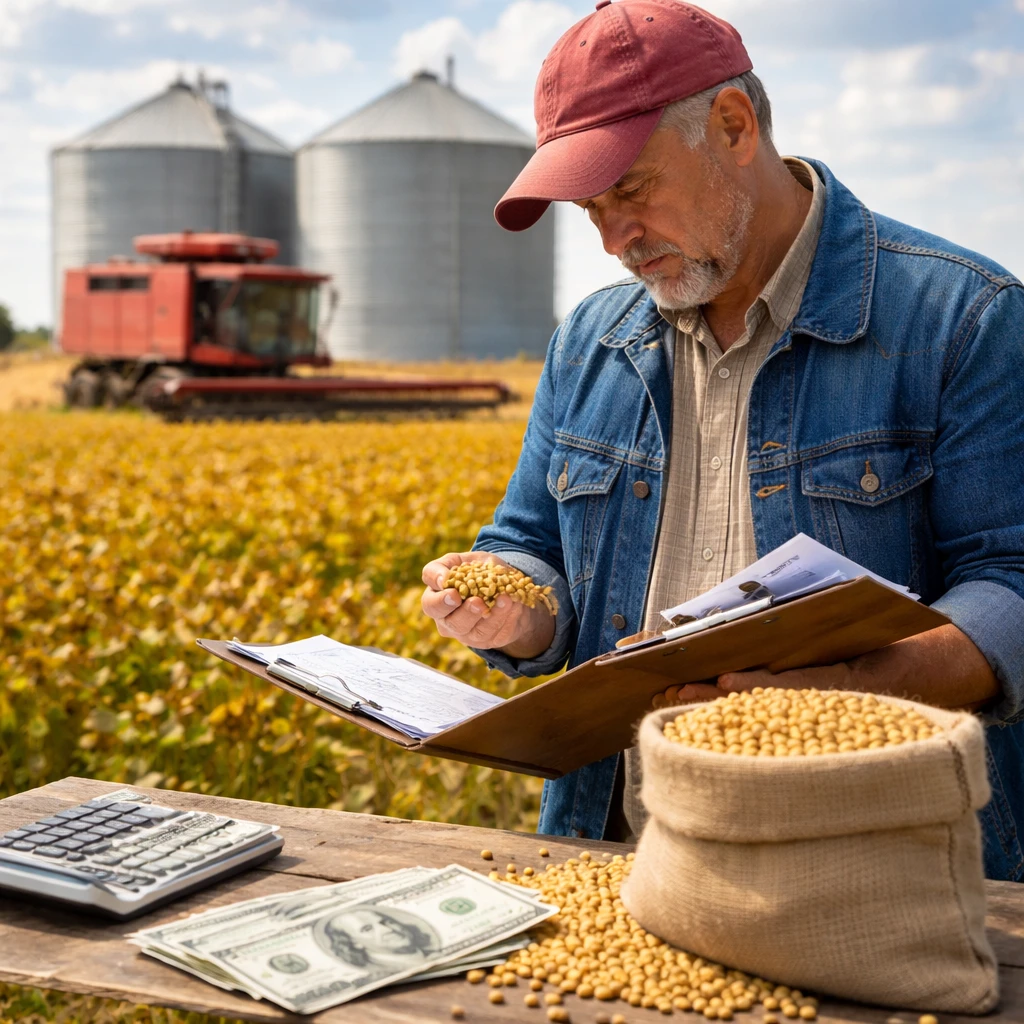

Earlier this month, the U.S. Department of Agriculture (USDA) revealed detailed figures pertaining to the financial assistance package valued at $12 billion, which was introduced to support farmers affected by trade conflicts, most notably with China. The disclosed payments specify the dollar amount per acre that farmers of major row crops can expect to receive, including soybeans, corn, and sorghum.
These payment details emerged after many producers had already conducted financial planning discussions with their lenders and placed orders for essential farm inputs such as seeds and fertilizers for the upcoming planting season. Despite this timing, agricultural officials have assured that the aid will be distributed by the end of February.
Farmers cultivating soybeans, a crop significantly impacted by the trade restrictions since China halted purchasing U.S. produce following tariff announcements in the spring, are slated to receive $30.88 per acre. Corn growers will obtain $44.36 per acre, while sorghum producers, also heavily affected by reduced Chinese demand, will be allotted $48.11 per acre. These figures derive from a USDA-calculated production cost formula.
While the aid represents an important financial infusion, many farmers express that it is an insufficient remedy against the broader economic challenges they face, including escalating expenses for fertilizer, seeds, and labor. These increasing input costs continue to compress profit margins, creating uncertainty about operational sustainability.
Some agricultural organizations have warned of potential farm closures if the economic pressures persist; however, other groups contend that a majority of farmers hold enough financial resources and equity to endure the current difficulties.
Kentucky soybean farmer Caleb Ragland, previously chair of the American Soybean Association, described the aid as "a bandage on a deep wound," emphasizing the need for enhanced market competition and opportunities to improve the agricultural sector’s outlook.
Similarly, Jed Bower, president of the National Corn Growers Association, called upon government officials to prioritize the development of additional demand channels for crops. He underscored that farmers’ futures depend on diversifying their buyer base, whether through domestic avenues like ethanol production and livestock feed or through expanded international trade.
Bower noted, "Corn growers have faced consecutive years of low prices coupled with high input expenditures. Although this financial assistance is appreciated, there is urgent necessity for policies that cultivate markets both nationally and abroad to afford growers greater economic certainty over the long term."
USDA Secretary Brooke Rollins reaffirmed the administration’s commitment to opening new market prospects while reinforcing existing support mechanisms for agricultural producers.
Darin Johnson, president of the Minnesota Soybean Growers Association, acknowledged that the allocated payment per acre fell short of the hopes harbored by farmers, suggesting that further assistance may be necessary despite this package providing some reprieve.
Despite the complications engendered by trade tensions, the wider farming community remains broadly supportive of President Trump's policies, especially with an expectation of more favorable trade agreements in the future.
The aid provisions designate in total approximately $11 billion for row crop producers cultivating corn, soybeans, wheat, sorghum, and similar crops. An additional $1 billion has been reserved for specialized crops and sugar, although specifics related to these have yet to be disclosed by the administration.
Following President Trump’s summit with Chinese leader Xi Jinping in South Korea during October, the White House indicated that China committed to purchasing at least 12 million metric tons of U.S. soybeans by the year’s end, plus 25 million metric tons annually over the subsequent three years. USDA officials report that China is progressing toward fulfilling the 12 million metric ton target by the end of February.
As of December 18, China had acquired roughly 6 million metric tons of soybeans according to the USDA’s weekly market update, with at least three additional purchases totaling 600,000 metric tons recorded since then.
While Beijing has not formally confirmed the 12 million metric ton purchase commitment for the current season, the Chinese embassy in Washington stated in early December that agricultural trade cooperation between the two nations continues in an orderly fashion.
Tim Lust, CEO of the National Sorghum Producers, expressed optimism regarding the recent surge in international purchases, highlighting that over 1 million metric tons of sorghum have been bought in recent weeks. Notably, China generally accounts for over half of U.S. sorghum exports annually.
The USDA has imposed payment caps, limiting assistance to a maximum of $155,000 per individual farmer or farm entity, and restricting eligibility to those whose adjusted gross income falls beneath $900,000. During the initial Trump term, some large-scale farms circumvented these limits, receiving multi-million dollar payments.
According to USDA data, the average U.S. farm size was 466 acres in the prior year, although substantial farms often exceed this size by acquiring adjacent land over time.