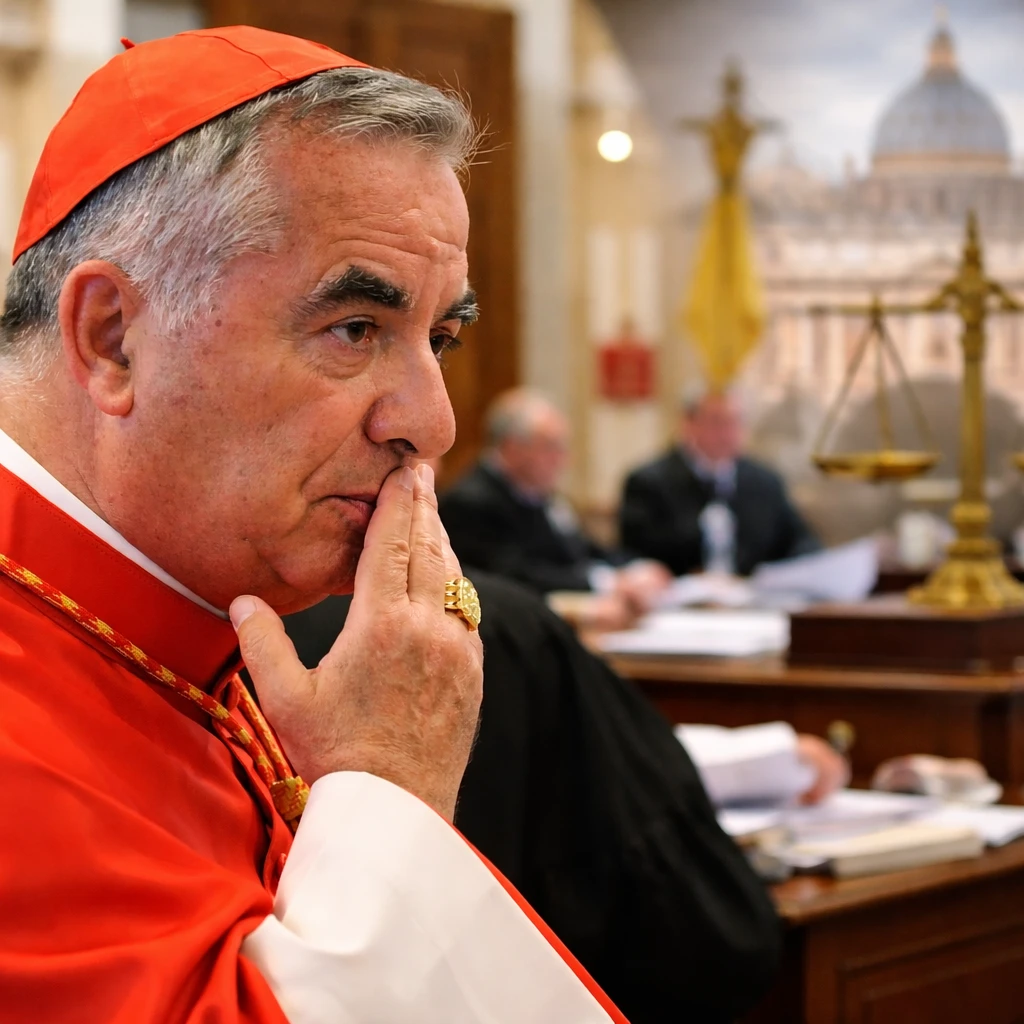

The Vatican resumed the appeals stage on Tuesday in what has been termed its “trial of the century,” after encountering significant obstacles for the prosecution that could influence the trial’s resolution. The legal process focuses on former Cardinal Angelo Becciu and eight additional defendants, all convicted in 2023 on various financial charges after an extensive two-year proceeding.
Recently, the Vatican’s highest judicial authority, the Court of Cassation, affirmed a lower court's decision to fully reject the prosecutors' appeal. This ruling implies that defendants will not see any deterioration in their current verdicts or sentences; indeed, any changes are likely to be improvements or outright reversals.
Coinciding with the Cassation’s decision, Vatican chief prosecutor Alessandro Diddi withdrew his objections and resigned from the case, foregoing the potential risk of being removed by the court.
Diddi’s role has come under scrutiny due to a set of WhatsApp conversations that surfaced, casting doubt on the trial’s integrity. These messages reveal a prolonged, covert attempt to target Becciu and suggest questionable actions not only by Vatican prosecutors and police but potentially implicate Pope Francis himself.
Defense lawyers have argued that these communications expose Diddi's lack of impartiality in managing evidence and witnesses, challenging his appropriateness to continue prosecuting the case. Though Diddi dismissed these claims as baseless, he opted to recuse himself to prevent his personal reputation from overshadowing the judicial pursuit of truth and justice.
Had the Cassation found Diddi’s involvement unacceptable, the consequences could have been severe, possibly resulting in a mistrial or nullification of proceedings. However, the appeals panel validated the legitimacy of his prosecutorial role despite his subsequent withdrawal.
The original 2021 trial centered on the Vatican's acquisition of a London property valued at 350 million euros (approximately $413 million). Prosecutors alleged that intermediaries and Vatican officials siphoned tens of millions of euros through fees and commissions and later extorted 15 million euros ($16.5 million) to relinquish control of the asset.
The investigation led to charges against Becciu and others, with Becciu convicted of embezzlement and sentenced to five and a half years in prison. While the tribunal found several defendants guilty on charges including embezzlement, abuse of office, and fraud, they were acquitted on various other allegations.
All parties have maintained their innocence and have filed appeals. Prosecutors also appealed, seeking broader convictions tied to an alleged grand conspiracy to defraud the Holy See. However, the tribunal mostly dismissed this overarching theory, instead convicting on more limited counts.
Prosecutor Diddi had viewed the appeals as a chance to reassert the initial case but submitted an appeal lacking the legal specificity required, merely reiterating the original conviction requests. This procedural misstep led to the appeals court rejecting the prosecutors’ appeal, a decision the Cassation upheld on January 9.
The defense strategy has also involved challenging Pope Francis’ participation in the investigation. Attorneys argue that in an absolute monarchy where the pope holds supreme legislative, executive, and judicial authority, the defendants could not receive a fair trial, particularly given Francis' use of such powers early in the inquiry.
Four secret executive decrees issued by Pope Francis in 2019 and 2020 granted Vatican prosecutors expansive powers, including wiretapping without judicial oversight and the ability to bypass existing laws. These decrees, revealed only shortly before trial and not formally published, offered no transparency regarding the surveillance's rationale, duration, or control mechanisms.
Legal experts observe that these covert, specially tailored decrees challenge fundamental fair trial principles, especially the 'equality of arms' between prosecution and defense, as the defense was unaware of the prosecution’s extended investigative powers. Even Vatican legal circles admit that the failure to publicize these orders was problematic.
Diddi contended the decrees assured unspecified safeguards for suspects. The tribunal initially dismissed defense motions asserting rights violations, concluding in a complex reasoning that no legal principle was breached since the pope himself established the laws.
Within canon law, the pope cannot be judged by any earthly tribunal but must also avoid promulgating laws contravening divine law. This raises potential conflict if courts were to decide that Francis’ decrees infringe upon fundamental rights.
The Vatican maintains that all defendants have been accorded a fair trial as the appeals advance, focusing on the legal intricacies and procedural challenges that continue to shape this complex case.