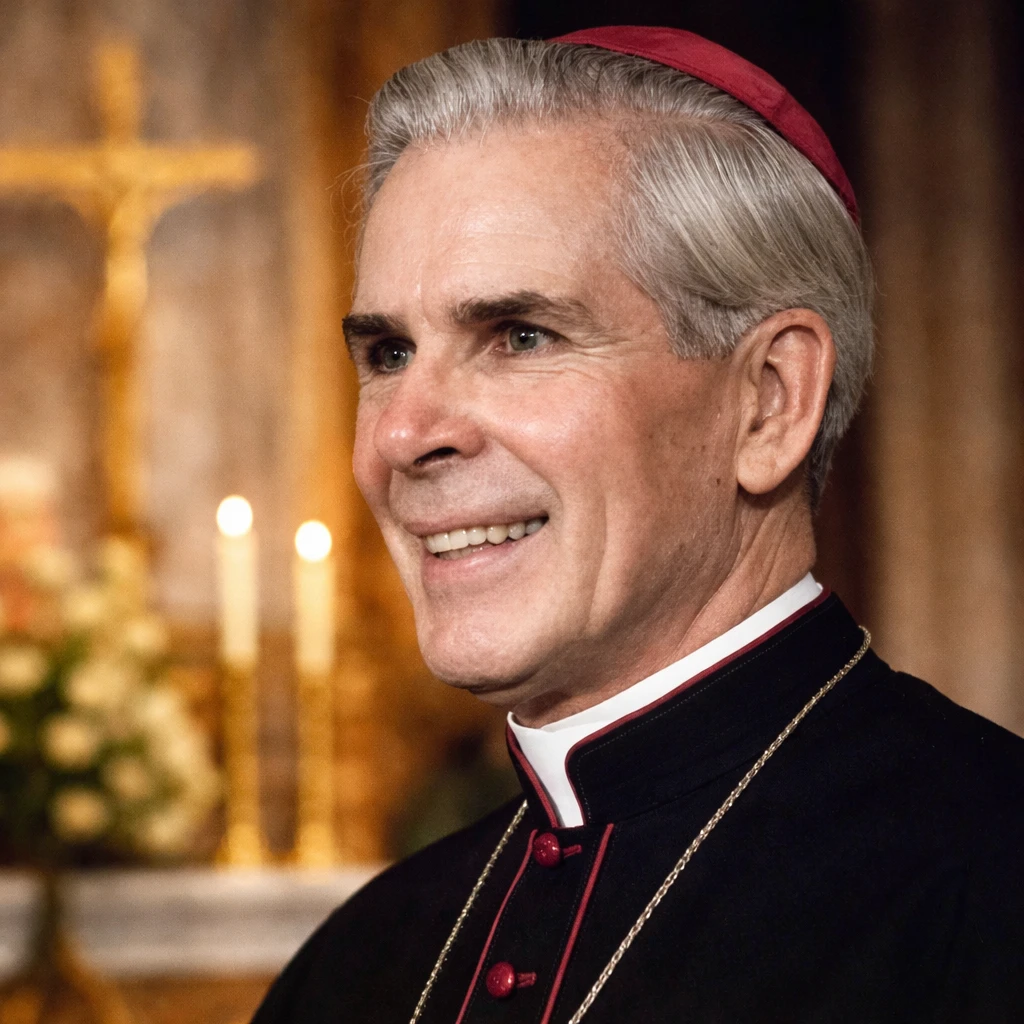

The Vatican has officially given permission to move forward with the beatification of Archbishop Fulton Sheen, an esteemed American religious figure known for his influential radio and television broadcasts during the mid-20th century. Sheen’s progression toward sainthood had previously encountered setbacks, notably a protracted legal contest concerning his burial place and questions raised about his administrative response to priests accused of sexual misconduct.
The Diocese of Peoria announced on Monday that following a thorough six-year investigation, the Vatican’s authorization reinstates the opportunity for Sheen’s beatification to be held in Peoria, Illinois, where the Archbishop was originally set to be honored. While the diocese has not yet assigned a definitive date for this important event, it has emphasized active collaboration with the Vatican’s Congregation for the Causes of Saints to finalize arrangements.
Peoria Bishop Louis Tylka highlighted the significance of the Vatican’s decision, pointing out that the beatification of Sheen will take place under the reign of Pope Leo XIV, himself a native of Illinois, thus connecting the local heritage of both the pontiff and the venerable cleric.
Archbishop Fulton Sheen gained widespread acclaim as a pioneering figure in Catholic evangelism in the United States. His 1950s television program, 'Life is Worth Living,' positioned him as an early trailblazer of televangelism. According to the Catholic University of America — where Sheen both studied and taught prior to becoming a bishop — he earned an Emmy Award and graced the cover of Time Magazine, cementing his status as one of the most influential Catholic personalities of the 20th century.
Pope Francis had previously affirmed a miracle attributed to Sheen on July 6, 2019, and scheduled the beatification ceremony for December 21 of that year in Peoria. However, with less than three weeks' notice, the Vatican indefinitely postponed the event due to investigative requests from the Diocese of Rochester, New York, where Sheen served as bishop from 1966 to 1969. The Rochester diocese sought a more in-depth examination of Sheen’s management during his episcopate, particularly in relation to the reassignment of priests facing allegations of sexual misconduct.
The inquiries centered on Sheen’s involvement with two priests accused of sexual improprieties. It is important to note that Sheen himself was never accused of any misconduct. Monsignor James Kruse, a senior canon law advisor based in Peoria, indicated in 2019 that an investigation had absolved Sheen of wrongdoing. Kruse publicly expressed concern over what he perceived as interference by the Rochester diocese, authoring an essay accusing that diocese of undermining Sheen’s cause, though this essay was later removed from the official beatification website.
Bishop Tylka’s recent statement refrained from addressing the specific concerns that prompted the postponement in 2019. Prior to this, Sheen’s cause encountered additional challenges, including a costly and extended legal dispute between Sheen’s relatives in Peoria and the Archdiocese of New York regarding the custody of his remains.
After Sheen's death in 1979, he was originally interred beneath the altar of St. Patrick’s Cathedral, New York. His remains were eventually transferred back to Peoria in 2019, following a court ruling that supported his niece’s request to reinter him in his home diocese.
The Pontifical Mission Societies in the U.S., the Vatican’s principal missionary fundraising organization which Sheen led from 1950 to 1966, welcomed the Vatican's renewed approval enthusiastically. Sheen bequeathed the majority of his personal assets—including writings and recordings—to this organization, which supports Catholic missions across Africa, Asia, Latin America, and other regions.
In a public statement, Monsignor Roger Landry, national director of the societies, reflected on the providential nature of the moment: “It is profoundly moving that, in God’s providence, the first U.S.–born pope is able to advance the cause of his fellow Illinois native, the most iconic evangelizer ever produced by the American Church.”