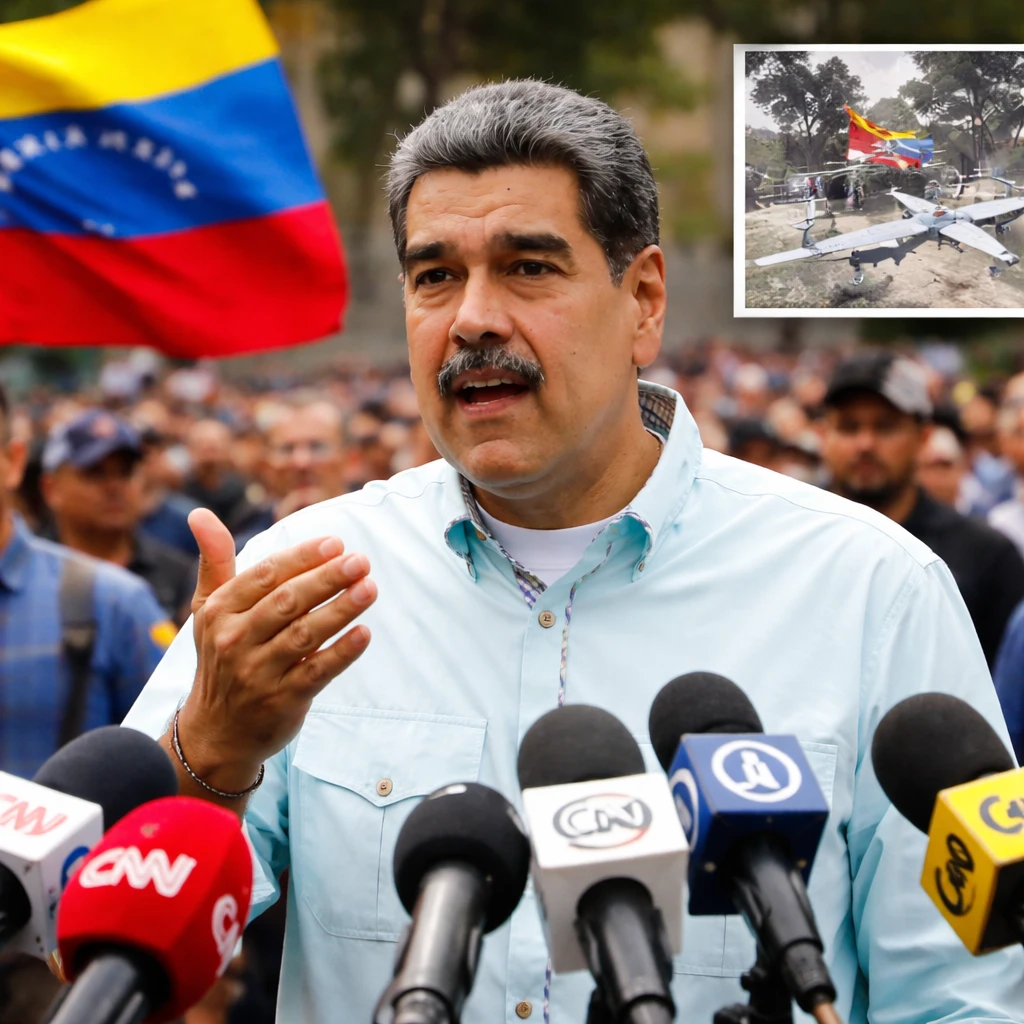

In a prerecorded interview broadcast on state television, Venezuelan President Nicolás Maduro conveyed a willingness to enter into negotiations with the United States aimed at addressing issues of drug trafficking. While emphasizing a desire to commence serious dialogue with concrete evidence, Maduro did not provide remarks concerning a recent drone strike reportedly conducted by the Central Intelligence Agency (CIA) against a docking location in Venezuela suspected of being utilized by drug cartels. This operation marks a notable intensification in US pressure on the Venezuelan government.
During his conversation with the Spanish journalist Ignacio Ramonet, Maduro reiterated his stance that US efforts constitute a strategy to enforce regime change and seize Venezuela's abundant oil resources. He characterized the approach as relying on threats, intimidation, and force, and deemed it necessary for both countries to initiate candid discussions with factual substantiation. "What are they seeking? It is clear that they seek to impose themselves through threats, intimidation and force," Maduro stated, later asserting the need for the two nations to "start talking seriously, with data in hand."
Maduro further declared that Venezuelan authorities have informed numerous US representatives that if Washington genuinely desires a collaborative framework to combat drug trafficking, the Venezuelan government is prepared to negotiate such an agreement. He also underscored Venezuela's openness to US investment in the oil sector, citing the presence of Chevron Corporation as the only major company presently exporting Venezuelan crude to US markets. He indicated Venezuela’s readiness to accommodate US investment "whenever they want it, wherever they want it and however they want it." The interview occurred on New Year’s Eve, coinciding with a US military announcement of attacks on five vessels suspected of involvement in drug smuggling, raising the total number of such strikes to 35 since the campaign's inception and resulting in at least 115 fatalities, including Venezuelan nationals.
President Donald Trump has defended these military actions as a necessary escalation in the effort to prevent illicit drugs from entering the United States. He has categorized the situation as an "armed conflict" against drug cartels, with operations initially centered off Venezuela’s Caribbean coast and subsequently extending to the eastern Pacific Ocean.
Regarding the recently reported CIA drone strike on Venezuelan soil near a dock potentially linked to drug trafficking organizations, two individuals familiar with the classified operation indicated the strike represented the first direct incursion within Venezuela as part of US anti-drug efforts. This development symbolizes a significant escalation in the Trump administration's campaign against Maduro's government, which faces US charges of narco-terrorism. When pressed about this specific operation, President Maduro refrained from elaboration, stating he would comment "in a few days."
The situation remains fluid as diplomatic and enforcement actions continue to evolve, with implications for regional security and international relations centered on Venezuela’s strategic oil resources and ongoing drug interdiction efforts.