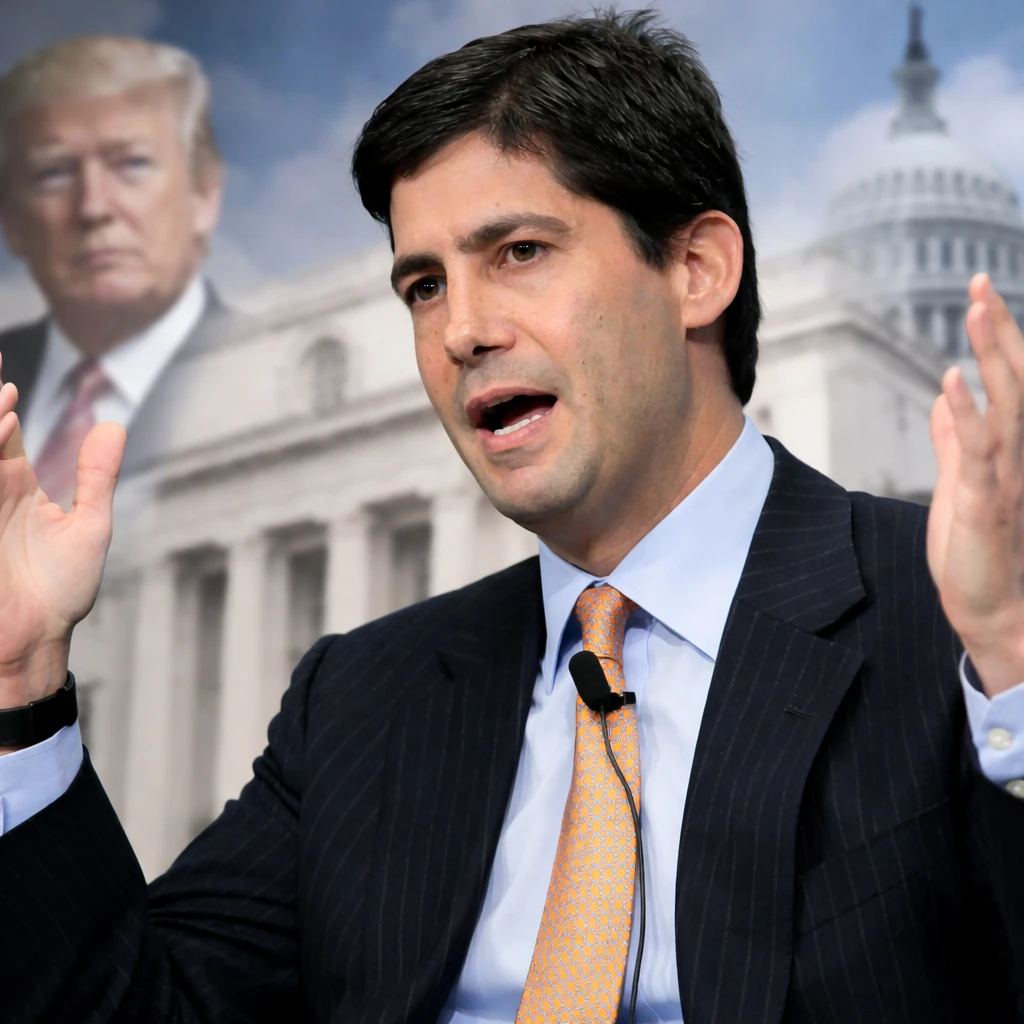
Kevin Warsh has long aspired to chair the Federal Reserve, a position that carries the weight of directing U.S. monetary policy amid complex political and economic pressures. Nearly ten years after first being considered for the role by then-President Donald Trump, Warsh now faces the daunting task of balancing three critical interests: the Federal Reserve’s committee of officials who vote on interest rate changes; the financial markets whose confidence can influence borrowing costs; and President Trump himself, a figure acutely aware of the impact that shifts in interest rates have on indebted entities ranging from private households to public institutions.
Raghuram Rajan, an economist from the University of Chicago and former governor of India’s central bank, emphasized the fine line Warsh must walk: "He has to thread that needle." He warned that appearing overly accommodating to the administration could alienate the Federal Reserve’s members, weakening Warsh’s ability to build internal consensus.
However, distancing himself too much from the White House could invite intensified scrutiny. Under Trump’s presidency, current Fed Chair Jerome Powell has faced persistent criticism for not reducing rates as swiftly as desired by the administration and is under investigation by the Department of Justice, which Powell characterizes as a tactic designed to pressure him into lowering rates.
Warsh’s confirmation awaits a potentially contentious Senate review, complicated by opposition from two Republican senators who have linked their support to the resolution of the ongoing DOJ probe. Senator Thom Tillis, a member of the Senate Banking Committee, reiterated his intent to oppose unless the investigation concludes. Similarly, Democratic Senator Mark Warner expressed skepticism about the chair's independence under the current political climate, highlighting challenges raised by the legal actions targeting Powell.
While Trump publicly stated he refrains from seeking explicit promises of rate cuts from Warsh to maintain the Fed’s "niceness" and purity, he acknowledged Warsh's alignment with lower interest rates. This marks a subtle transition from previous declarations urging aggressive rate reductions and demanding loyalty from potential Fed chairs. The situation is further complicated by the possibility that Powell remains a Federal Reserve Board member and voting participant on the interest-rate committee until 2028, extending beyond his chairmanship set to conclude in May, thereby introducing a rare scenario of a former chair serving alongside the new leader.
One of the most prominent challenges facing Warsh will be asserting his independence. Alan Blinder, former Fed vice chair and Princeton economist, expressed concern over undisclosed agreements between Warsh and Trump, noting Trump's tendency to seek loyalty commitments. Blinder recognized Warsh’s expertise with market operations and monetary policy, as well as his diplomatic skills and ability to influence Fed officials through consensus-building.
The Federal Reserve’s policy decisions rest on a committee comprising 19 officials, with 12 active voters on the rate-setting panel. These include seven Board members, the president of the Federal Reserve Bank of New York, and four rotating regional bank presidents. Recent committee actions indicate a predisposition against aggressive rate cuts; a January vote to maintain current rates was 10-2, and in December, officials projected only a single cut in the year ahead. A portion of the officials remain cautious about further easing due to inflation concerns.
Consensus is vital for Fed policy; historically, chairs have rarely been overruled, with the last instance in 1986. Economist Matthew Luzzetti from Deutsche Bank notes Warsh's success will likely depend on emerging economic indicators such as labor market trends and inflationary pressure changes.
Warsh has previously criticized the Fed's extensive bond-buying program that expanded its balance sheet to $6.6 trillion following the 2008 financial crisis and the pandemic. He argues the program fostered unchecked government spending by lowering borrowing costs, and that reducing these holdings could contract money supply, thereby controlling inflation and enabling further rate reductions. However, downsizing the Fed’s bond portfolio could disrupt financial markets accustomed to abundant liquidity, presenting an intricate challenge for Warsh’s tenure.