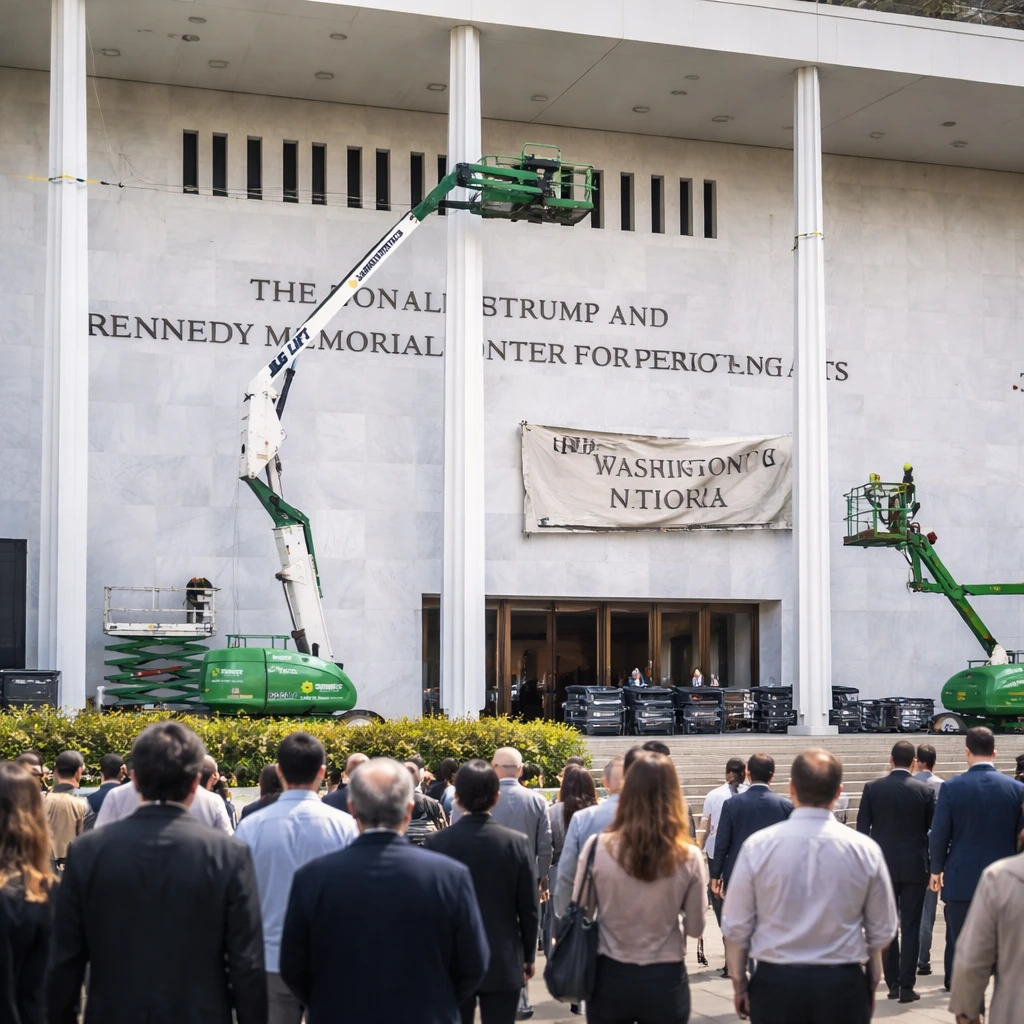

The Washington National Opera (WNO) revealed on Friday its plans to dissociate from the John F. Kennedy Center for the Performing Arts, signaling a significant institutional shift following the change in administration of the prominent Washington, D.C. arts venue. WNO intends to complete an "amicable transition" away from the Kennedy Center and return to functioning as an independent entity.
This strategic departure stems from the financial challenges imposed after the dismissal of the Kennedy Center's prior governing board and the installation of new leadership aligned with President Donald Trump, who assumed control over the institution. The opera company emphasized the need to reduce its upcoming spring season and move performances to alternative locations to maintain fiscal responsibility and meet balanced budget commitments.
While the WNO statement did not directly mention President Trump or the Kennedy Center's decision to rebrand itself externally as the "Trump Kennedy Center," these developments form the backdrop to the separation. Despite the rebranding, Congress retains the venue's formal name as the John F. Kennedy Center for the Performing Arts.
Ric Grenell, serving as the interim executive director of the Kennedy Center and a Trump appointee, acknowledged the substantial financial support the Center has provided to the Washington National Opera over time, yet noted the company's operations continue to incur deficits.
Grenell indicated that the opera's transition from the Kennedy Center would offer "the flexibility and funds to bring in operas from around the world and across the U.S.," as conveyed in a social media post. This move follows a pattern of event cancellations by notable artists including Lin-Manuel Miranda and Peter Wolf. These cancellations emerged after President Trump replaced the prior leadership last year and appointed himself as chair of the board of trustees. Additionally, the December renaming to the Trump Kennedy Center triggered further cancellations.
Opera representatives explained that the Center's new financial approach, requiring full advance funding of productions, conflicts with the operational realities of staging operas. Since ticket sales cover only a fraction of production costs, opera companies typically depend on grants and donations, which are secured progressively during the production planning phase rather than years in advance.
The opera also criticized the Center's model for its incompatibility with WNO's subsidy strategy, which leverages revenue from popular mainstream works to support less profitable or lesser-known pieces. Francesca Zambello, who has served as WNO's artistic director for 14 years, expressed pride in her association with the Kennedy Center as a cultural landmark and pledged to continue offering a range of productions from classic masterpieces to contemporary operas.
As of late Friday, listings on the Kennedy Center's website still featured upcoming WNO productions including "Treemonisha," "The Crucible," and "West Side Story," despite the announced plans to move shows elsewhere.