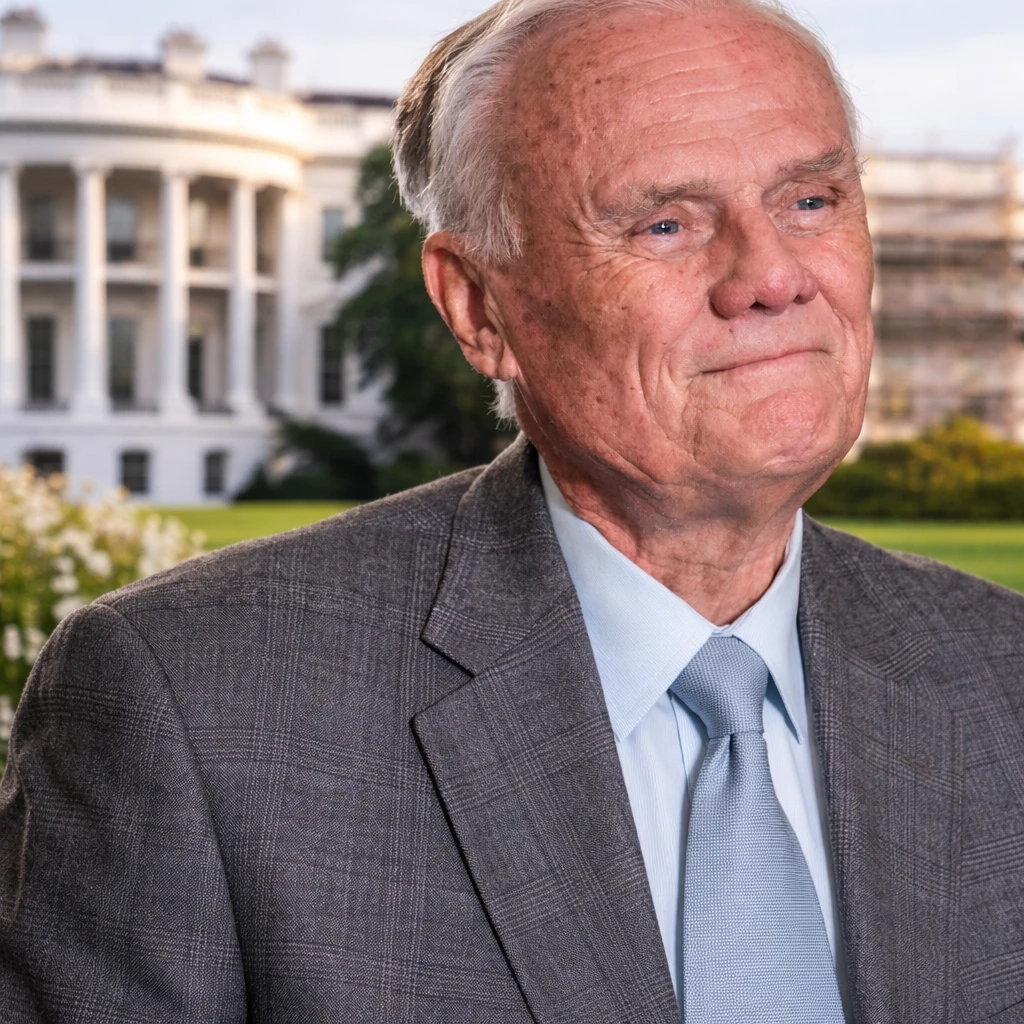

For decades, presidents residing at the White House have expressed the need for additional space to host events, a reality underscored by Gary Walters, who served as the White House chief usher under four administrations spanning over twenty years. Walters' extensive tenure, covering presidencies from Ronald Reagan to George W. Bush, positions him as a credible observer of the executive residence's spatial limitations.
Walters likened the chief usher's role to that of a general manager overseeing the residence's operations, stating that conversations about expanding entertaining areas have been a recurring theme among the leaders he served. This longstanding spatial concern provides context for the ballroom expansion endorsed by President Donald Trump, who has publicly advocated for increased event capacity at the White House.
Even before his presidency, Trump voiced the intention to construct a dedicated ballroom within the White House. In July, an official announcement confirmed plans to develop a 90,000-square-foot addition on the complex's east side, aimed at accommodating around 650 seated guests. The estimated cost for this project was initially set at $200 million, with funding pledged through private donations, including the president's personal contribution.
Subsequently, the proposed ballroom's capacity was raised to 999 guests. By October, the two-story East Wing had been dismantled to make way for the construction, a move that surprised many outside observers. Alongside the demolition, the project's price tag doubled to approximately $400 million by December.
Historical precedent exists for alterations to the White House grounds and structures to meet evolving presidential needs. Walters recalled earlier changes such as the replacement of conservatories and stables to develop the West Wing in the early 20th century, the addition of a third floor to the residence, and the construction of the East Wing during World War II to serve the first lady and White House staff. This lineage of modifications illustrates a consistent pattern of adapting the estate's facilities.
In his duties as chief usher, Walters stated that assessing the capacity of significant public rooms was standard practice with incoming presidents and their teams. Each expressed concerns about the limited size and capacity for official functions. Specifically, the State Dining Room can host roughly 130 guests with a standard arrangement of 13 round tables seating ten individuals each. The East Room accommodates about 300 attendees in chair-only setups, though available space shrinks if television camera placement is necessary.
President Trump reportedly finds these venues insufficient for the scale of some events, particularly noting issues with using large tents on the South Lawn as temporary venues for state dinners and other grand occasions. Walters acknowledged challenges with these tents, highlighting drainage problems that lead to soggy ground despite efforts such as installing culverts to channel water away. Tents also affect lawn maintenance by damaging grass, necessitating reseeding.
The dismantling of the East Wing evoked personal reflection for Walters, who holds fond memories of the space. It was in this wing that he met his wife, Barbara, who worked in the visitors office during the Nixon and Ford administrations. Their longstanding marriage coincides with a professional history intertwined with the White House.
Walters' career path was notably shaped by an early injury. After military service, his pursuit of a role compatible with university studies led him to the Executive Protective Service, a precursor to the U.S. Secret Service. A broken ankle sustained before graduating prevented him from typical field duties, resulting in a reassignment to administrative roles within the White House. This detour deepened his familiarity with the residence's operations and security systems, providing a foundation for his future leadership within the Usher’s Office.
Promotion to sergeant preceded discovery of an assistant usher vacancy, a position Walters assumed in 1976. His tenure culminated in appointment as chief usher by President Reagan in 1986, entrusting him with comprehensive oversight of White House maintenance, renovations, food services, and personnel management. His team included a large cadre of domestic and technical staff supporting the residence's functions.
Concluding his service in 2007 after 37 years, Walters reflected on his unique vantage point during pivotal presidential milestones, including presidential resignations, appointments, impeachments, and disputed elections. He emphasized the privilege and honor inherent in personally engaging with multiple presidential families over his tenure, highlighting the personal connections forged in the course of his responsibilities.