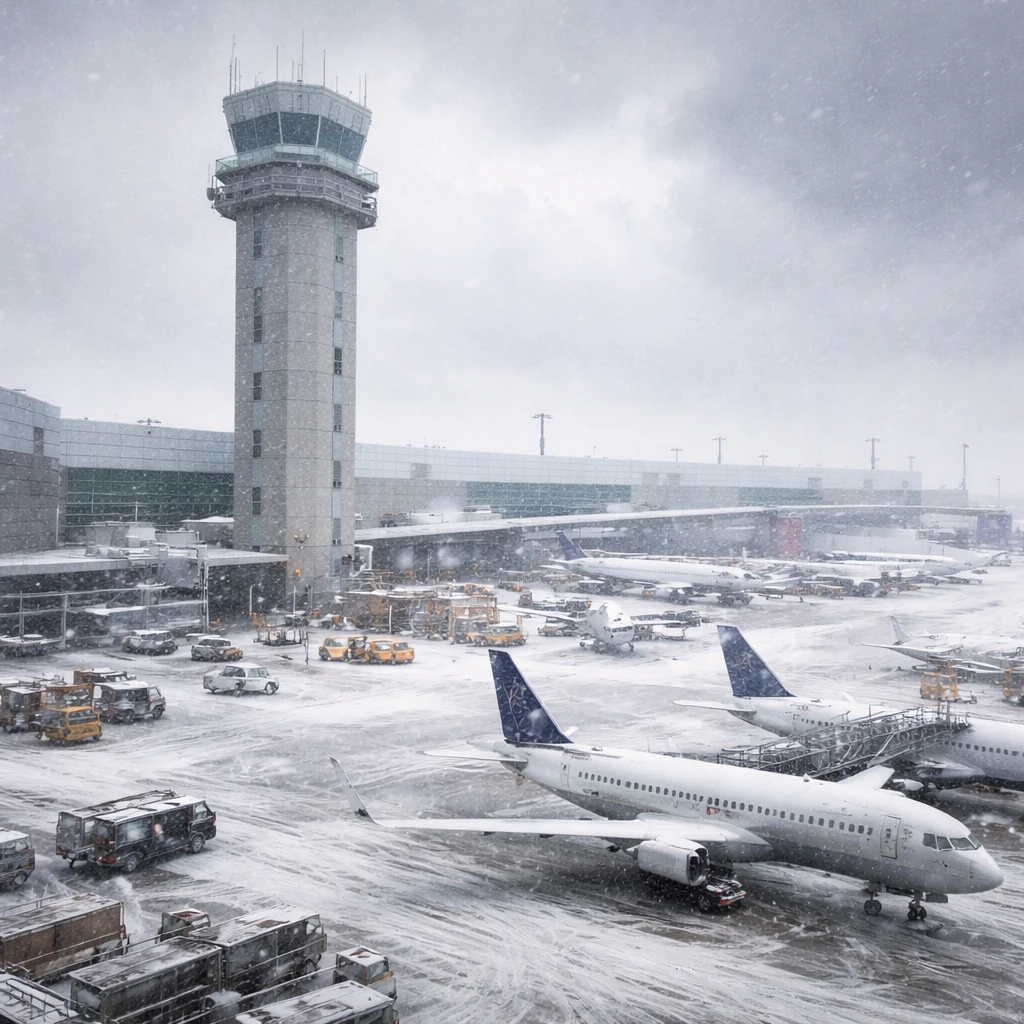

A powerful winter storm is poised to create substantial problems for air travel in the United States, with airlines alerting passengers to the potential for widespread flight cancellations and delays at numerous major airports. The National Weather Service issued warnings late Saturday indicating that nearly 180 million Americans - representing over 50% of the national population - could be affected by a storm system stretching from the southern Rocky Mountains region through to New England.
Forecasters predict that as the storm pushes through the southern states and advances into the northeastern corridor, accumulations of 1 to 2 feet (30 to 60 centimeters) of snow are likely in cities ranging from Washington D.C. through New York City to Boston. This severe winter weather threatens to disrupt key travel hubs and heavily impact passenger logistics.
Since the onset of the storm on Saturday, flight-tracking platform FlightAware reports that more than 13,500 flights have been canceled nationwide, with approximately 9,600 cancellations scheduled for Sunday alone. Aviation analytics firm Cirium indicates that the volume of cancellations constitutes the most significant interruption in U.S. air travel since the onset of the COVID-19 pandemic, with cancellation rates surpassing 29% of all departing flights for the day.
Ronald Reagan Washington National Airport issued a traveler advisory through its official channels, highlighting extensive disruptions: nearly all outbound flights, totaling 414 or about 97% of departures, have been canceled. Other major airports bracing for significant disruptions include Dallas-Fort Worth International Airport, Charlotte Douglas International Airport, Philadelphia International Airport, Hartsfield-Jackson Atlanta International Airport - the busiest airport in the nation - as well as both John F. Kennedy International and LaGuardia Airports in New York.
Leading carriers are reporting heavy impacts on their flight schedules: American Airlines has canceled more than 1,400 flights planned for Sunday. Delta Air Lines and Southwest Airlines each report approximately 1,000 canceled flights, while United Airlines has canceled in excess of 800 departures. JetBlue Airways is facing cancellations for over 560 flights, affecting roughly 70% of its daily schedule.
Travelers affected by cancellations face significant logistical challenges. Those at airports are advised to seek assistance directly from customer service desks, while those located at home or lodging away from the airport should contact airline reservation centers via phone or online platforms. Passengers are encouraged to proactively research alternative routing options to expedite rebooking processes once connected with airline representatives.
Most airlines offer complimentary rebooking for passengers on later flights, subject to seat availability. However, airlines are not obligated to book travelers on flights operated by different carriers, although many major airlines may have partnerships allowing limited cross-carrier accommodations.
Regarding passenger rights, consumers whose flights are canceled retain entitlement to full refunds if they opt not to travel or can arrange alternate transportation. This entitlement holds regardless of whether the ticket purchased was labeled as non-refundable. Moreover, refunds extend to any ancillary fees, including charges for checked bags, seat selection, or premium services that passengers did not utilize due to cancellation.