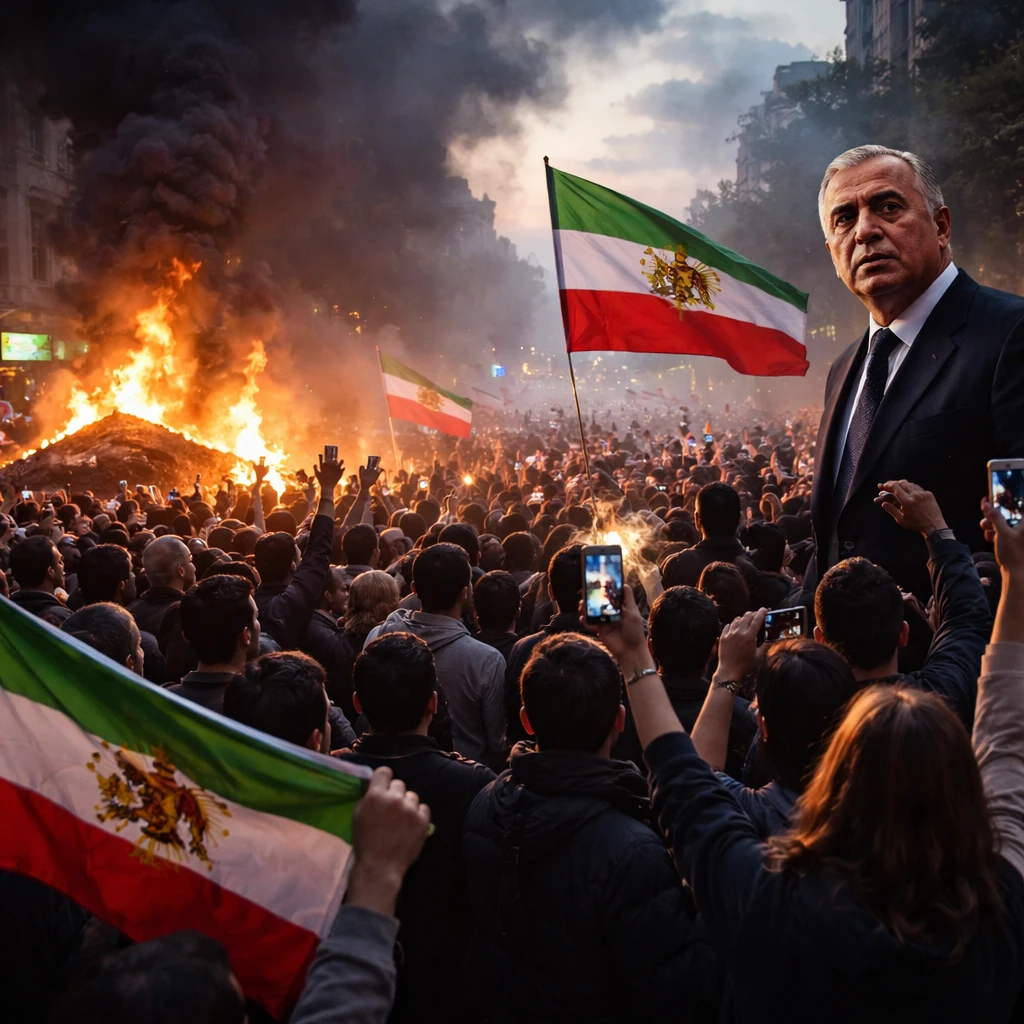

In the wake of an appeal from Iran’s exiled Crown Prince Reza Pahlavi, residents of Tehran and other urban centers took to their streets and balconies on Thursday evening to voice their dissent through chants and street rallies. Witness accounts describe widespread vocal protests with slogans condemning the Islamic Republic, signalling a notable escalation in the ongoing unrest sweeping the country.
The demonstrations coincided with an immediate government-imposed blackout of internet access and telephone services across Iran, as reported by technology firm CloudFlare and advocacy group NetBlocks. Attempts to dial Iranian landline and mobile numbers from Dubai were unsuccessful, underscoring the extensive communication shutdown. Historically, such measures have preceded intensified government efforts to suppress protest activity.
This latest wave of unrest presents a critical juncture for the Iranian populace, marking the first significant test of Crown Prince Reza Pahlavi's influence. Pahlavi, son of the last monarch who fled the country amid the 1979 Islamic Revolution, had urged the public to mobilize at specific times over two consecutive days. Despite his historical ties, the demonstrations have been largely leaderless, leaving the extent of Pahlavi's impact uncertain.
Demonstrators voiced anger not only at the regime but also expressed nostalgia for the era of the shah — a position once punishable by death but now indicative of the depth of popular dissatisfaction, which initially stemmed from grievances tied to Iran’s deteriorating economic conditions. Many marketplaces and bazaars shuttered their doors in solidarity with the protests, which have spread to rural areas as well as cities.
Casualty reports are mounting amid the unrest. The U.S.-based Human Rights Activists News Agency documented at least 41 fatalities and over 2,270 arrests since demonstrations began. Additionally, local media outlets have reported targeted attacks on security personnel, including fatal assaults on police and Revolutionary Guard forces in multiple provinces.
The Iranian leadership faces mounting challenges as the protests grow in scale and intensity. Supreme Leader Ayatollah Ali Khamenei and the civilian government are under increasing domestic pressure amidst the country’s political instability. Hard-line media have indicated the deployment of surveillance technologies such as drones to identify participants in the protests, reflecting the government’s serious approach to this uprising.
Internationally, responses to the protests have been mixed. The United States advised restraint, warning of consequences if Iranian security forces employ lethal force against demonstrators, a position that Iran’s Foreign Ministry rejected as hypocritical and intrusive. Online activity linked to the U.S. State Department depicted symbolic acts by protesters such as renaming streets and discarding government-subsidized goods, highlighting the economic dimensions of the dissent.
Among those affected by the unrest is Nobel Peace Prize recipient Narges Mohammadi, detained since December. Her family noted that the recent protests echo previous waves in 2009 and 2019, sharing persistent demands for systemic change and an end to clerical domination.
Experts caution about the lack of cohesive leadership within the protest movement, pointing out the longstanding suppression of potential transformative political figures by Iran’s security services. The current fragmentation leaves the trajectory of these protests and the country’s political future uncertain.
Crown Prince Pahlavi’s call to action included warnings to the regime and its military forces that global observers, including U.S. President Donald Trump, were monitoring the situation closely. However, his own political standing remains complex, given his historical associations and external criticisms, including perceived connections to Israel.