
Widespread Southern Power Failures Amid Extensive Winter Storm
January 25, 2026
News & Politics

Widespread Southern Power Failures Amid Extensive Winter Storm

Icy Conditions and Snowfall Stretch from Texas to New England, Threatening Infrastructure and Travel

Summary

A vast winter storm system swept across large swaths of the United States, bringing a mixture of sleet, freezing rain, and snow that led to widespread power outages in the Southeast and dangerous travel conditions across multiple regions. Authorities warn that the severe weather is expected to persist, accompanied by dangerously low temperatures, which could continue to disrupt transportation and infrastructure.

Key Points

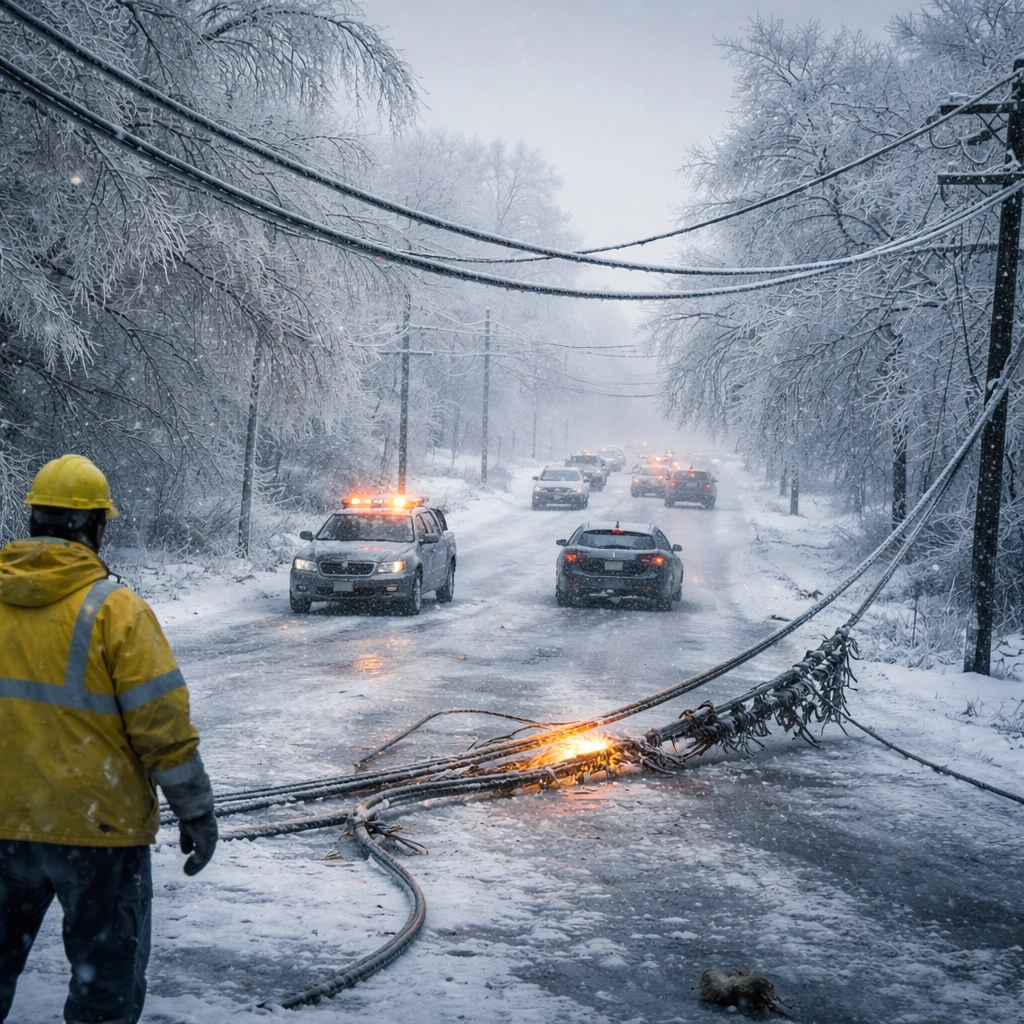
The storm caused extensive power outages due to ice accumulation causing damage to trees and power lines, primarily affecting the Southeast.
Heavy snow and ice stretched across a vast area from the Texas and New Mexico region to New England, indicating an unusually large scope for this weather event.
Prolonged severe weather and falling temperatures are forecasted, potentially causing extended disruptions to infrastructure and travel across multiple regions.

On Sunday, a severe winter storm delivered a combination of sleet, freezing rain, and snow throughout significant portions of the United States, resulting in plummeting temperatures below zero and major interruptions to both air and road travel. The accumulation of ice caused tree limbs and electrical wires to break, leaving hundreds of thousands of residences and commercial buildings across the Southeastern U.S. without power.

The National Weather Service reported that the precipitation, including ice and snow, was set to continue into Monday, followed by harshly low temperatures, which may lead to prolonged travel challenges and impacts on infrastructure. Snowfall was occurring heavily from the Ohio Valley extending to the Northeast, while critical levels of ice accumulation posed a severe threat from the Lower Mississippi Valley through the Mid-Atlantic and Southeastern regions.

Weather Service meteorologist Allison Santorelli noted the storm's unparalleled scale, explaining that its effects stretched from New Mexico and Texas to as far northeast as New England, covering an area roughly 2,000 miles wide. This expansive coverage resulted in a widespread and unique meteorological event impacting a substantial portion of the country.

Risks
  • Continuing ice and snow accumulation risk further damage to power infrastructure in the Southeast, potentially prolonging outages and affecting households and businesses.
  • Dangerous travel conditions are likely to persist, increasing the risk of accidents and transportation delays, particularly in the Ohio Valley, Northeast, and Mid-Atlantic.
  • Sustained subzero temperatures following the storm may further strain infrastructure and hamper recovery efforts, amplifying the storm's economic and operational impact.
Disclosure
This article is based solely on the data and statements provided by the National Weather Service and relevant meteorological authorities as reported. No additional external analysis or assumptions have been included.
Search Articles
Category
News & Politics

News & Politics

Related Articles
FDA Initiates Review of BHA Food Additive Safety

The U.S. Food and Drug Administration (FDA) has announced plans to conduct a comprehensive reassessm...

Partisan Divide Deepens as White House Excludes Democratic Governors from NGA Meeting

The longstanding bipartisan forum of the National Governors Association (NGA) is facing disruption a...

Using Fireplace Ashes in Your Garden: Benefits and Considerations

Amidst a notably cold winter leading to increased fireplace use, many homeowners are seeking sustain...