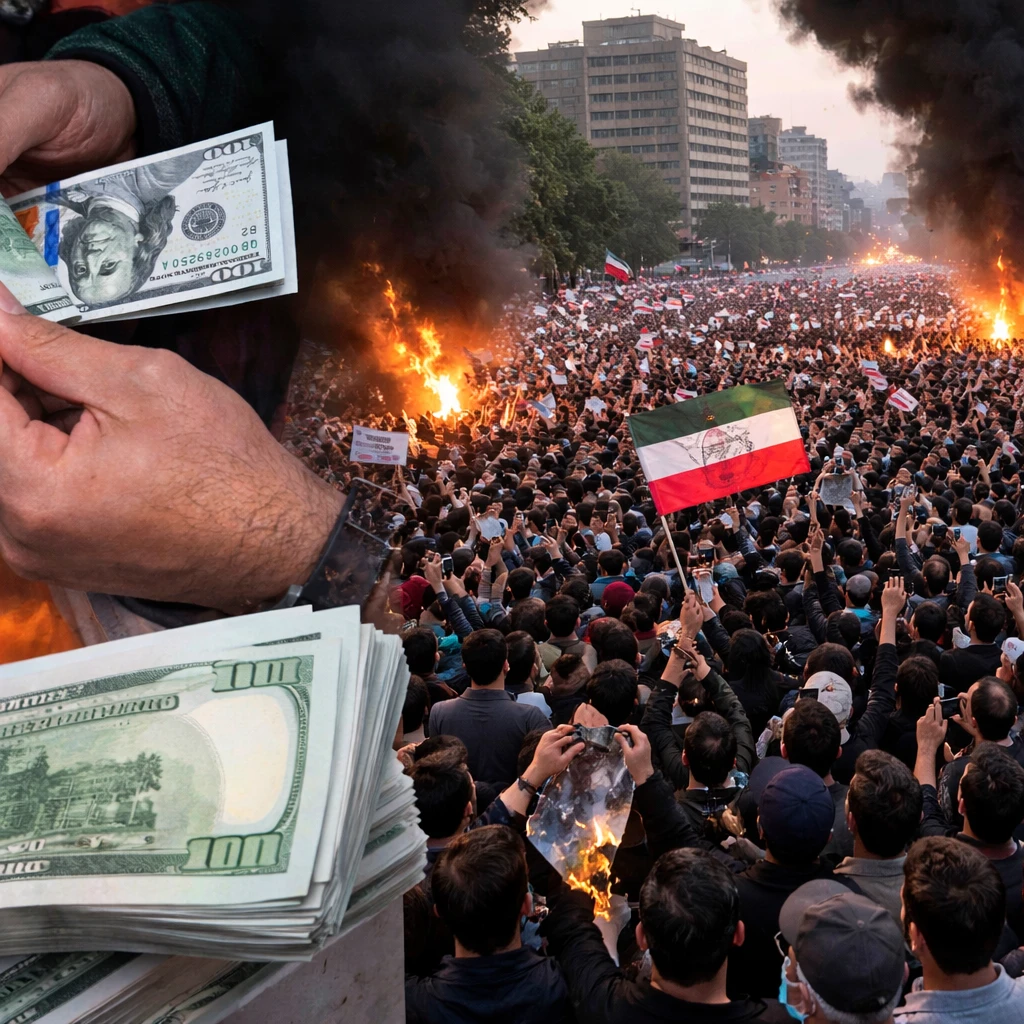

Tehran witnessed a surge of large-scale protests on Monday, marking the most significant public unrest in Iran since 2022. This wave of demonstrations followed the Iranian rial’s sharp decline to a record low against the U.S. dollar and the resignation of Mohammad Reza Farzin, the governor of Iran’s Central Bank. State television confirmed Farzin's departure from the post as the protests unfolded.
The unrest prominently took place along Saadi Street in central Tehran, as well as the Shush district near the renowned Grand Bazaar, a hub historically vital to Iran’s political movements, including the 1979 Islamic Revolution that transformed Iran’s governance structure. Many traders and shopkeepers ceased operations and joined street rallies, underscoring the economic discontent motivating their participation.
The state news agency IRNA and witnesses also reported parallel protests in Iran’s large cities such as Isfahan in the nation’s center, Shiraz in the south, and Mashhad in the northeast. Notably, in some Tehran districts, police used tear gas to disperse the crowds, reflecting mounting tensions between security forces and demonstrators.
This resurgence of public protest is the most intense since the nationwide mobilizations triggered in 2022 by the death of Mahsa Jina Amini, a 22-year-old woman who died in police custody after being detained for alleged violation of hijab regulations imposed by the morality police.
Eyewitnesses relayed that traders shut their shops on Monday, urging others to do so as well, disrupting business activity in targeted areas. The semi-official ILNA news agency observed that while many shops closed their doors, some establishments remained operational.
Earlier on Sunday, demonstrations were confined predominantly to two prominent mobile markets in downtown Tehran, where protestors voiced anti-government slogans.
Concurrently, the Iranian rial plummeted further, reaching approximately 1.42 million rials per U.S. dollar on Sunday before slightly recovering to 1.38 million on Monday. Rumors regarding Farzin’s impending resignation had circulated for the prior week. When he assumed office in 2022, the rial traded at about 430,000 per dollar, illustrating an alarming depreciation trajectory within a short period.
The plunge of the national currency exacerbates existing inflationary pressures, causing sharp increases in the prices of essential commodities, particularly foodstuffs and daily necessities. This deterioration presents escalated challenges for household budgets and risks intensifying, especially in the wake of recent government adjustments to gasoline pricing.
Official statistics highlight a December inflation rate rising to 42.2% year over year, a figure that increased by 1.8% compared to November 2023. Food costs have surged by 72%, while healthcare and medical-related products saw a 50% increase relative to December of the previous year, according to the state statistics center. These trends have raised concerns among experts about the approach of hyperinflation.
Adding to economic worries, official Iranian media have reported potential government initiatives to raise taxes during the Iranian New Year, scheduled for March 21, further unsettling domestic markets and consumers.
For historical perspective, the rial traded at approximately 32,000 rials per dollar following the 2015 nuclear agreement, which temporarily eased sanctions in return for nuclear program restrictions. This accord unraveled after the United States' withdrawal in 2018, which has had lasting repercussions on Iran’s economy.
Geopolitical tensions also contribute to market uncertainty. Last June, a 12-day conflict involving Iran and Israel heightened concerns among Iranian citizens about the possibility of an expanded confrontation that might involve the United States. Such escalations compound economic anxiety within the country.
Additionally, the reimposition of nuclear-related sanctions by the United Nations in September through the so-called “snapback” mechanism has frozen Iranian assets abroad, prohibited arms transactions with Tehran, and imposed penalties tied to its ballistic missile program, perpetuating economic isolation.