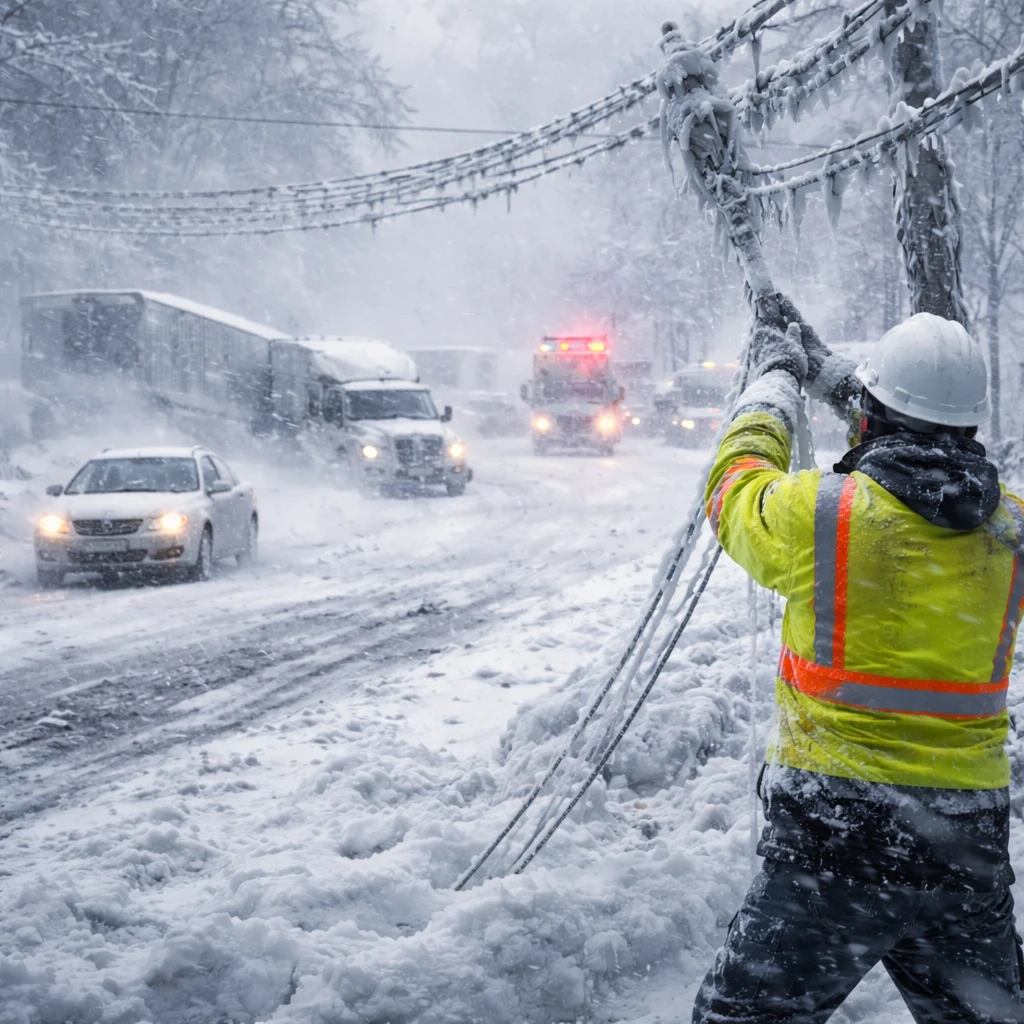

A sweeping winter storm has gripped large swathes of the United States, prompting school closures and travel disruptions across the Midwest and beyond as it gathers strength. Affecting roughly half of the nation — stretching from Texas to New England — this multi-day weather event brings a combination of heavy snow, sleet, freezing rain, and painfully cold temperatures.
Authorities and weather experts have warned that the resulting ice accumulation could deliver damage comparable to a hurricane, particularly in regions where ice build-up endangers power lines and trees. As a precautionary measure, airlines cancelled thousands of flights, while churches transitioned to online services, and Nashville’s Grand Ole Opry opted to proceed with a fanless radio performance on Saturday night. Carnival festivities in Louisiana were either called off or postponed due to safety concerns.
Current advisories cover at least 177 million Americans who are on alert for ice and snow, while upwards of 200 million remain under warnings related to dangerously cold conditions, with many areas experiencing overlapping alerts. Utility companies are bracing for outages expected when ice-laden trees and cables give way, potentially continuing to fall even after the main storm passes.
In Dallas, preparatory shopping was underway as residents stocked up on essentials. Maricela Resendiz shared that her household intended to stay indoors and avoid unnecessary exposure for the weekend given the expected severity of the storm.
The storm’s trajectory is expected to bring freezing rain and sleet initially across Texas and Oklahoma, reaching the Southern states before moving northeastward. The National Weather Service predicts accumulation of about one foot (30 centimeters) of snow in cities along the northeastern corridor, including Washington, D.C., New York, and Boston.
The harsh conditions are driven in part by an influx of Arctic air descending from Canada. This severe cold has already forced school closures across the Midwest, including Chicago, due to wind chill values expected to plummet to minus 40 degrees Fahrenheit (minus 40 Celsius). Exposure to these temperatures can induce frostbite in under ten minutes, rendering travel to school unsafe.
In North Dakota’s capital, Bismarck, where wind chills reached minus 41 Fahrenheit, local workers like Colin Cross prepared for the storm while decked out in multiple insulating layers. He remarked on the cognitive challenge posed by enduring such extreme cold for extended periods.
Nationwide air travel has taken a significant hit, with FlightAware data showing over 1,000 flight delays or cancellations on Friday alone, roughly half centered around Dallas airports. This disruption is expected to increase with about 2,300 cancellations anticipated for Saturday flights.
Oklahoma’s Department of Transportation has proactively treated roads with salt brine to improve safety, while the Highway Patrol suspended trooper days off to bolster staffing. Federal emergency preparations include readying nearly 30 search and rescue teams and stationing over 7 million meals, 600,000 blankets, and 300 portable generators strategically within the storm’s projected path, as reported by the Federal Emergency Management Agency.
The lingering cold and ice accumulation, especially in southern states where electricity often heats homes, pose significant hazards. Ice can add substantial weight to power infrastructure, increasing the risk of power outages and pipe freezes which complicate recovery efforts. The depth of these conditions means communities could face extended hardships even after the precipitation ceases, given the slow thawing process associated with Arctic air masses moving southward and eastward.
Residents, officials, and businesses across the affected regions are bracing for the broad impacts this winter storm promises, from travel interruptions to potential power crises and safety risks posed by the severe ice and cold.