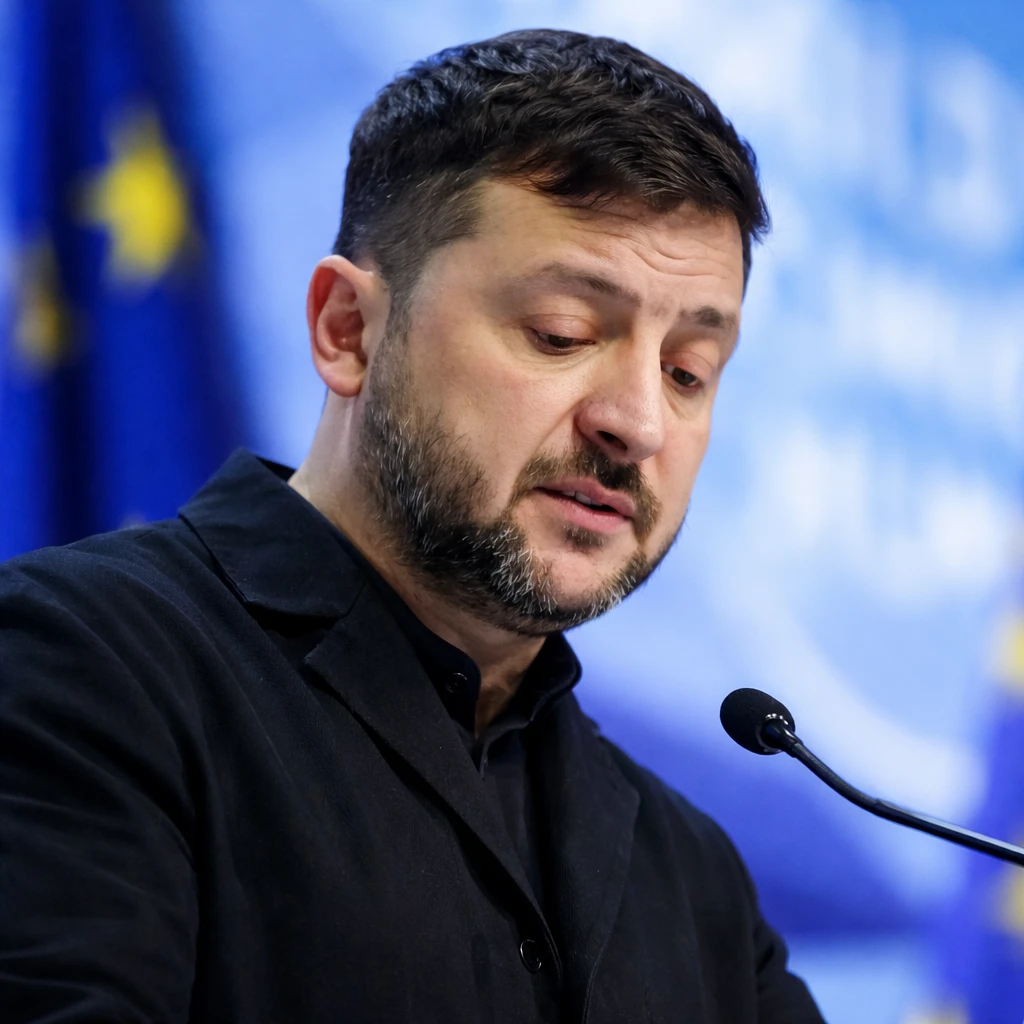

During the World Economic Forum held in Davos, Switzerland, Ukrainian President Volodymyr Zelenskyy expressed strong criticism of European nations for what he described as a hesitant and divided approach to Russia's prolonged military aggression. He lamented that nearly four years since the invasion began, the continent's response remains insufficient, thereby leaving Ukraine vulnerable to ongoing threats from the Kremlin.
In his address, Zelenskyy conveyed a pressing desire for Europe to solidify its role as a decisive global actor. Contrasting Europe’s cautious stance with the more robust and assertive actions taken by the United States in other international situations such as Venezuela and Iran, he implied that Europe’s lack of cohesion hampers its effectiveness. He recounted referencing the film "Groundhog Day" last year during the same forum to illustrate the repetitive nature of the challenges faced, stating that despite urging for Europe to develop stronger defense mechanisms, very little substantive change has occurred.
He remarked, “Just last year, here in Davos, I ended my speech with the words: Europe needs to know how to defend itself. A year has passed. And nothing has changed. We are still in a situation where I must say the same words again.” This cyclical predicament parallels Ukraine’s own ongoing struggle in the conflict, where repeated hardships have become a constant reality for its citizens.
While European nations recognize their strategic interest in the region’s stability and have extended financial, military, and humanitarian support to Kyiv, Zelenskyy pointed to inconsistencies within the European Union—comprising 27 member states—in their willingness and ability to assist. Disputes over how to address Russia's actions and periodic delays in coordinated responses have compounded Ukraine’s frustrations.
Sessions following Zelenskyy’s speech included a private meeting with U.S. President Donald Trump, described by both leaders as positive and productive. On his return flight to Washington, Trump noted that Zelenskyy expressed a willingness to negotiate a peace deal, though he also acknowledged historical difficulties in reaching durable agreements despite numerous previously promising discussions. Key obstacles remain, particularly regarding territorial boundaries, which have dominated talks for the past several months.
Trump also emphasized the severe hardships facing Ukrainians during winter, particularly the lack of heating due to Russia’s repeated attacks on infrastructure such as the power grid. He commended the resilience of the populace enduring these conditions, calling the situation "no way to live."
The conflict, ongoing since Russia’s initial incursions in 2014 and drastically escalated with the 2022 full-scale invasion, has resulted in Moscow controlling approximately 20 percent of Ukrainian territory. However, these battlefield gains have come at a steep cost to Russian forces and economy, exacerbated by international sanctions.
Despite Ukraine making significant advances in domestic arms production, it remains dependent on Western weaponry supplies and faces manpower shortages. Its defense minister recently reported extensive desertions and draft evasion among Ukrainian troops, indicating internal strains. Maintaining global awareness is vital for Zelenskyy, especially as other conflicts compete for international attention.
He reproached Europe for its slow decision-making, insufficient defense funding, reluctance to disrupt Russia’s illicit oil shipments—often referred to as a "shadow fleet"—and hesitation in utilizing frozen European assets to support Ukraine financially. Zelenskyy characterized Europe more as a geographical and historical entity than a unified political force, noting a tendency among some Europeans to advocate resilience but defer actual commitment until external pressures, such as electoral timelines, impose urgency.
The United States is currently pursuing peace negotiations, with envoys actively engaging both Kyiv and Moscow amid concerns the talks might compel Ukraine to accept unfavorable terms. Recently, Trump’s special envoy Steve Witkoff and Jared Kushner held a lengthy discussion with President Vladimir Putin in Moscow, though specific unresolved negotiation points were not disclosed. Zelenskyy acknowledged that while peace proposals are approaching readiness, the critical issue of the status of Russian-controlled eastern Ukrainian lands remains unsettled.
He further outlined expected trilateral meetings among the U.S., Ukraine, and Russia scheduled to commence in the United Arab Emirates. Zelenskyy stressed the necessity for all parties, including Russians, to be prepared to make concessions for progress to occur.
Zelenskyy and Trump have had a complex relationship, yet the Ukrainian leader expressed gratitude for U.S. provision of Patriot air defense systems, which aid in defending civilian infrastructure from missile strikes. He requested additional systems, highlighting their importance in mitigating the humanitarian toll of the conflict. Although Trump reduced direct support for Ukraine, other NATO member states have increased their purchases of U.S. arms to continue assisting Kyiv through alternative arrangements.