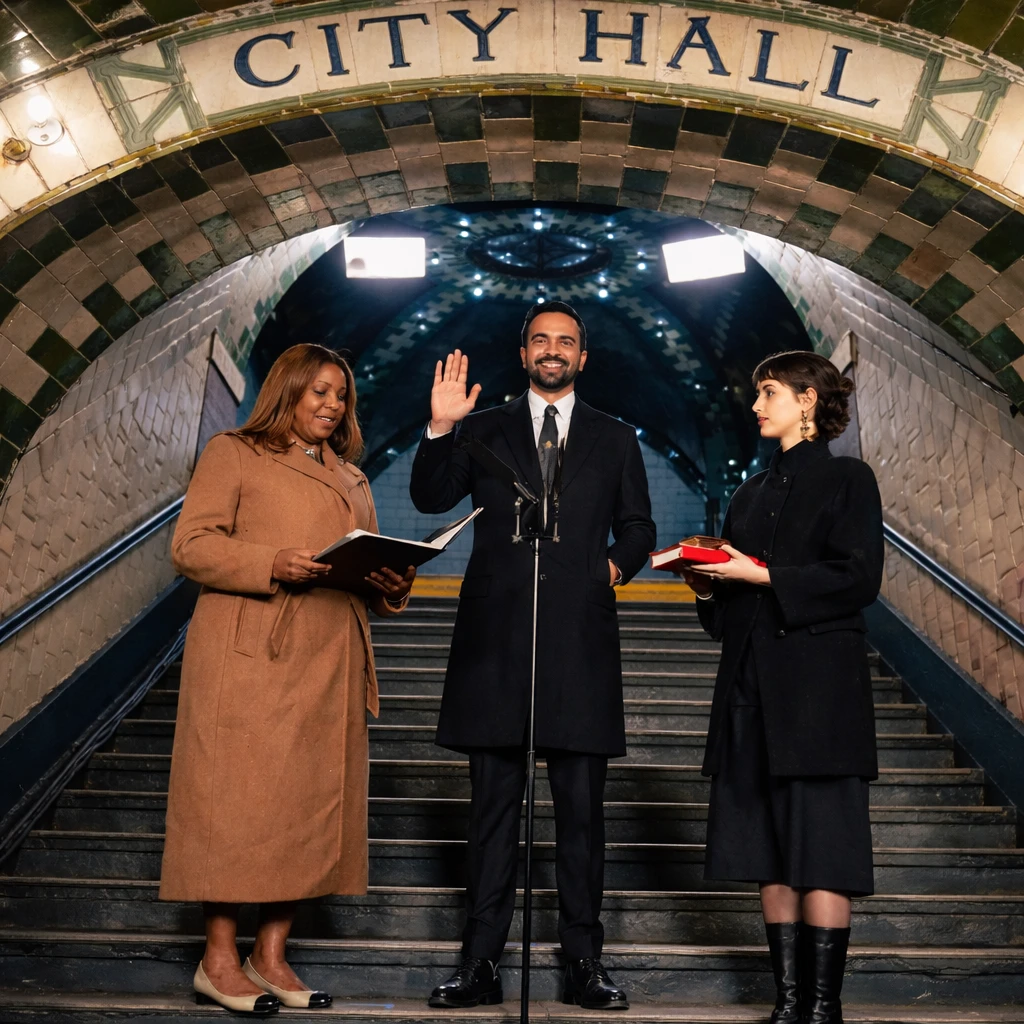
In a landmark event just after midnight on Thursday, Zohran Mamdani was inaugurated as the mayor of New York City at the historic, now-decommissioned City Hall subway station in Manhattan. Mamdani, a Democrat, took his oath with his hand placed upon a Quran, signifying his milestone as the city's first Muslim mayor.
The ceremony, held in an intimate setting and led by New York Attorney General Letitia James, highlighted the significance of the location. The City Hall station is renowned for its sweeping arched ceilings and its status as one of the original stops in New York City's subway system.
During his initial address as mayor, Mamdani reflected on the symbolic choice of venue, emphasizing the pivotal role of public transportation in sustaining the vitality and heritage of the metropolis. He used this moment to announce Mike Flynn as the new commissioner for the Department of Transportation.
Concluding the early ceremony with a warm thank you, Mamdani ascended the stairs from the underground venue to prepare for a larger public celebration. Later in the day, at 1 p.m., U.S. Senator Bernie Sanders, a figure admired by Mamdani, will administer a formal oath of office at City Hall in a more prominent ceremony. This event will be followed by a public block party on Broadway’s "Canyon of Heroes," famed for its ticker-tape parades, marking the mayor's official introduction to the city's citizens.
Mamdani's ascent to the mayoralty represents multiple historic firsts for New York City. Beyond being the first Muslim to hold the office, he is also the first mayor of South Asian heritage and the first mayor born in Africa. At 34 years old, he is the youngest individual to assume the city's highest office in recent decades.
The mayor's electoral campaign was marked by a strong emphasis on affordability, a theme that resonated broadly across the city's political landscape. Mamdani, who identifies as a democratic socialist, campaigned on a platform of sweeping reforms designed to alleviate the financial burdens of living in an expensive urban environment. His policy proposals included initiatives such as free child care and public bus services, a rent freeze for approximately one million households, and introducing pilot programs for city-operated grocery stores.
However, the mayor's responsibilities extend beyond policy promises, involving day-to-day governance challenges such as managing sanitation, snow removal, and urban pests, alongside addressing persistent complaints about subway system delays and road maintenance issues like potholes.
Born in Kampala, Uganda, Mamdani moved to New York City at age seven. He grew up as a Muslim in a post-9/11 environment in the city, witnessing firsthand the complexities faced by his community. A naturalized U.S. citizen since 2018, Mamdani's political journey began with activism and campaign work for Democratic candidates before securing a seat in the state Assembly representing a Queens district in 2020.
Following his inauguration, Mamdani and his wife, Rama Duwaji, will relocate from their rent-stabilized one-bedroom apartment in an outer borough to the mayoral residence in Manhattan, marking a significant personal transition.
The mayor takes office at a time when New York City is emerging from the economic and social disruptions caused by the COVID-19 pandemic. Crime rates have reportedly fallen back to levels observed before the pandemic, tourist activity is resurging, and unemployment rates have normalized to pre-pandemic figures.
Despite positive trends, critical concerns surrounding high living costs and escalating rent prices persist. Additionally, Mamdani's administration faces the complex dynamic of interacting with national leadership. Throughout the mayoral race, Republican former President Donald Trump threatened to cut federal funding and discussed deploying National Guard troops to the city if Mamdani was elected. Yet in a surprising development last November, Trump invited Mamdani to the White House for a meeting characterized by civility. Although Trump expressed a desire to support the mayor's success, ideological and policy disagreements, especially concerning immigration, suggest ongoing tension.
Mamdani's leadership also encounters questions and opposition within some Jewish community segments due to his critical views of Israel's government policies.
To effectively govern, Mamdani has assembled a team of experienced city officials and advisors. A strategic decision to retain Police Commissioner Jessica Tisch was viewed as a move to reassure business sectors concerned about potential major shifts in policing.
Entering one of the most relentless political roles in the United States, Mamdani stands as one of the country's most closely observed politicians as he endeavors to guide New York City through both its enduring challenges and opportunities in the coming years.