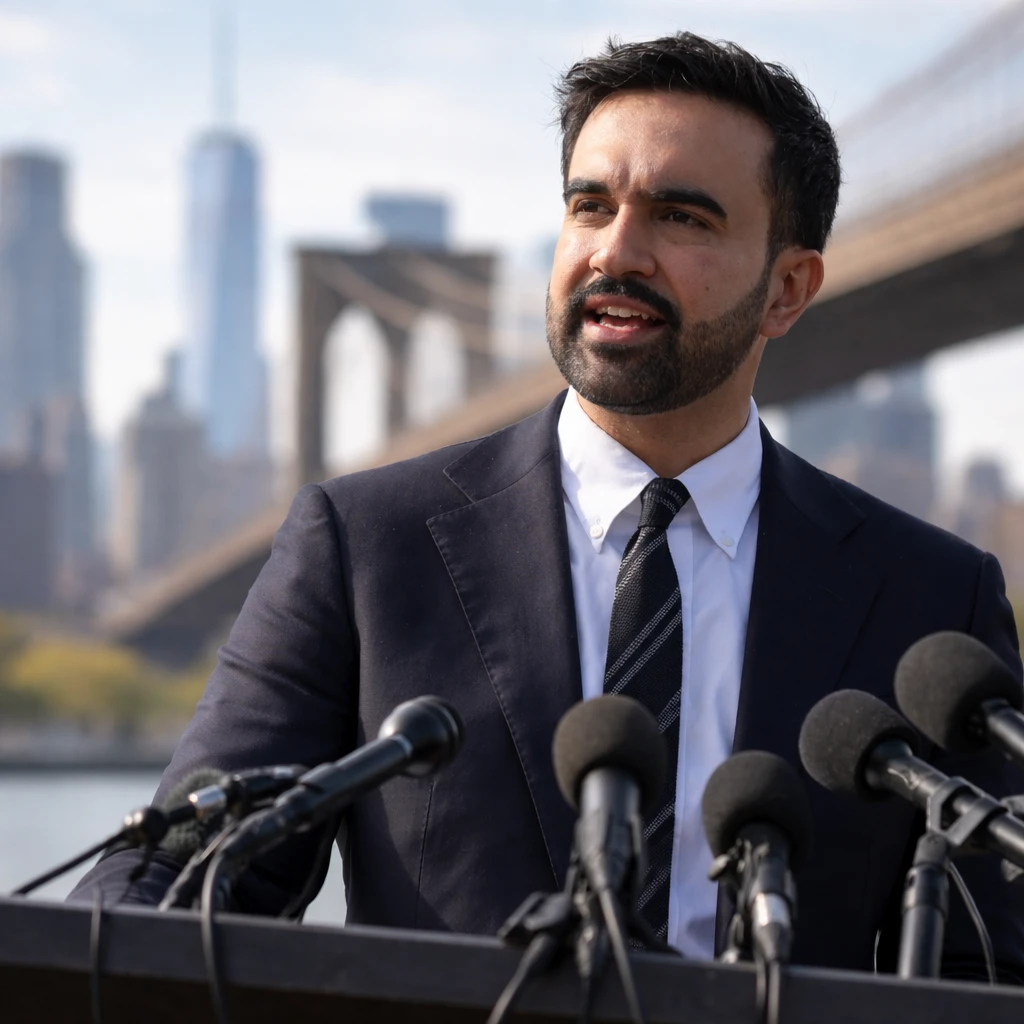

Zohran Mamdani stands on the cusp of becoming New York City’s mayor, carrying with him a pledge to significantly overhaul the city’s governance. At just 34 years old and aligned with democratic socialism, Mamdani has become a subject of intense scrutiny prior to officially taking office. Republicans have branded him a liberal threat, while some Democrats view him as too far left. Progressive observers are vigilant for any indication he might moderate his positions.
When January 1 arrives, Mamdani assumes control of one of the nation’s most visible municipal governments, with the spotlight shining brightly on whether he can translate his campaign promises into effective governance amid skepticism and opposition. Political consultant George Arzt, who has worked with former Mayor Ed Koch, stresses the importance of Mamdani’s initial period in office. “He’s got to use the first 100 days of the administration to show people he can govern,” Arzt notes, emphasizing that establishing a reputation for seriousness will be crucial.
Arzt suggests Momdani's inaugural address should clearly communicate his agenda and deliver a roadmap to New Yorkers outlining priorities and methods. Responsibility will then fall to his experienced hires to manage the operational aspects of the city, while Mamdani and his team focus on pursuing his comprehensive affordable living initiatives.
Mamdani’s campaign centered on a substantial reorientation of government priorities, aiming to favor working-class residents over wealthier inhabitants. His proposals include free child care, fare-free public buses, and a freeze on rents for roughly one million rent-stabilized apartments — initiatives that resonated strongly in the notoriously expensive city, positioning him as a rising figure within a Democratic Party eager for innovative leadership during a politically volatile period.
Despite this momentum, governing New York City poses everyday administrative challenges that differ from promising election platforms. Tasks such as ensuring regular trash collection, road repair, and timely snow plowing are fundamental duties of the mayor, alongside management of public transit disruptions, crime incidents, and civic order. Columbia University professor and Democratic strategist Basil Smikle highlights the need for Mamdani to temper expectations initially and secure a few tangible achievements early in his term.
Smikle underscores the challenge Mamdani faces in convincing skeptical New Yorkers that his policy proposals can yield practical benefits, acknowledging that comprehensive implementation is unlikely within the first months of office.
A key aspect of Mamdani’s policy agenda is his universal free child care plan, a proposal that has garnered notable backing from Governor Kathy Hochul. The moderate governor has publicly supported the initiative and intends to collaborate on it, though no definitive path to execution has been outlined. Despite her opposition to raising income taxes, she has indicated openness to increasing corporate tax rates. State Senate Deputy Leader Michael Gianaris, an ally of Mamdani, affirms that there is recognition among state leaders of the electorate’s mandate and stresses the importance of making progress on Mamdani’s policy goals to honor voters’ choices.
Another centerpiece policy is Mamdani’s promise to freeze rents for rent-stabilized apartments, which does not necessitate state authorization. However, this plan faces obstacles following outgoing Mayor Eric Adams’s recent appointments to a board that regulates annual rent increases — a maneuver that could complicate implementation efforts in Mamdani’s initial year. Nonetheless, the mayor-elect maintains confidence in the feasibility of enacting the freeze.
Additional challenges include Mamdani’s fraught relationship with segments of the Jewish community, stemming from his critiques of the Israeli government combined with advocacy for Palestinian rights. The Anti-Defamation League intends to monitor his administration’s policies and appointments amid concerns about rising antisemitism. Earlier controversies involving one of Mamdani’s appointees, who resigned over historical social media posts containing antisemitic content, have further heightened scrutiny. Mamdani has responded by emphasizing the importance of distinguishing legitimate criticism of Israel from antisemitism.
His previous endorsement of defunding the police remains a contentious issue, although his choice to retain the current police commissioner has alleviated fears of abrupt changes to law enforcement leadership. Furthermore, interactions with former President Donald Trump have eased temporarily following a cordial Oval Office meeting, yet relations remain cautious given stark political contrasts, particularly on immigration enforcement.
Entering office, Zohran Mamdani must balance his transformative ambitions with the essential demands of running a complex urban infrastructure. His early performance, ability to secure support within New York’s broader political ecosystem, and personal management of sensitive community relations will shape the trajectory of his mayoral tenure.