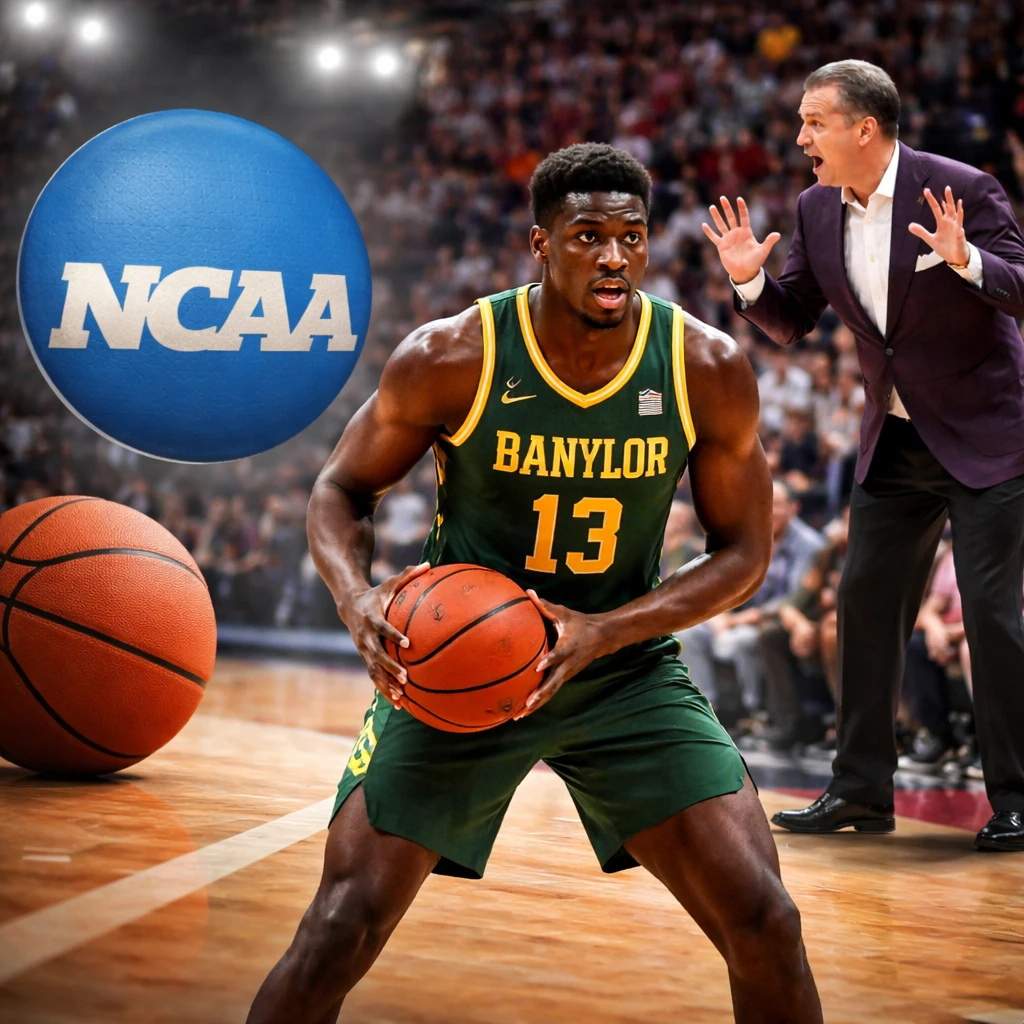
In response to concerns following Baylor University's midseason signing of James Nnaji, a player drafted into the NBA in 2023 who had been competing professionally in Europe, the NCAA stated on Tuesday that it will not allow eligibility for players who have entered into NBA contracts. This reaffirmation comes amid widespread coaching criticism within college basketball concerning the Bears' integration of the 7-foot Nigerian athlete.
Baylor's announcement on Christmas Eve of Nnaji's signing positions him to potentially debut in their Big 12 conference opener against TCU. Nnaji, selected as the 31st pick in the second round by the Detroit Pistons more than two years ago, has since had his draft rights transferred from Detroit to Boston, Charlotte, and most recently the New York Knicks in October 2024. Despite being drafted at 18, the 21-year-old has not appeared on an NBA roster, having played in European leagues prior to his draft selection.
Historically, college basketball has featured international players with diverse professional experiences. Currently, with players benefiting from name, image, and likeness (NIL) compensation, programs have welcomed talent from the NBA's developmental G League. The NCAA has clarified its position that while athletes under regular NBA contracts or two-way deals associated with G League affiliates are ineligible, this restriction does not unequivocally extend to G League players without NBA contracts or to those engaged in other domestic and international professional leagues.
"As institutions increasingly recruit individuals with international league experience, the NCAA is mindful in applying rules related to actual and necessary expenses to ensure fairness," said NCAA President Charlie Baker. "This approach aims to prevent prospective student-athletes with experience in American leagues from being disadvantaged compared to international counterparts. Additionally, enrollment and midyear participation of individuals without prior collegiate experience have long been permitted."
Baylor’s coach Scott Drew’s actions, while debated, were defended by some peers who note comparable cases of international players joining college teams post-draft. Arkansas coach John Calipari voiced the need for clearer regulations, specifically advocating for automatic ineligibility for any player who has declared for the NBA draft and remained in it, irrespective of nationality.
Calipari remarked, "If you enter the draft and get selected, you should not be eligible for college competition. This should apply universally, not just to American players." In contrast, Drew pointed out examples such as Nastja Claessens, a 2024 WNBA third-round pick currently contributing to Kansas State, underscoring the complexity of established rules amidst evolving player pathways. He acknowledged rule-making uncertainties, emphasizing the necessity for programs to adapt for competitive success within regulatory frameworks.
Compounding the situation, the NCAA faces challenges from legal rulings that hinder the enforcement of eligibility standards. Legal counsel for Vanderbilt quarterback Diego Pavia, involved in a lawsuit seeking extended eligibility, cited Baylor's Nnaji signing to support their case. Baker acknowledged that while the NCAA has prevailed in most eligibility-related litigation, recent extraordinary judicial decisions enjoining longstanding rules nationwide without trial create instability.
He affirmed plans to collaborate with Division I leadership to safeguard college basketball from these disruptive legal challenges. These developments highlight ongoing tensions between athlete rights, league regulations, and the structure of college sports, impacting recruitment, eligibility determinations, and institutional governance.