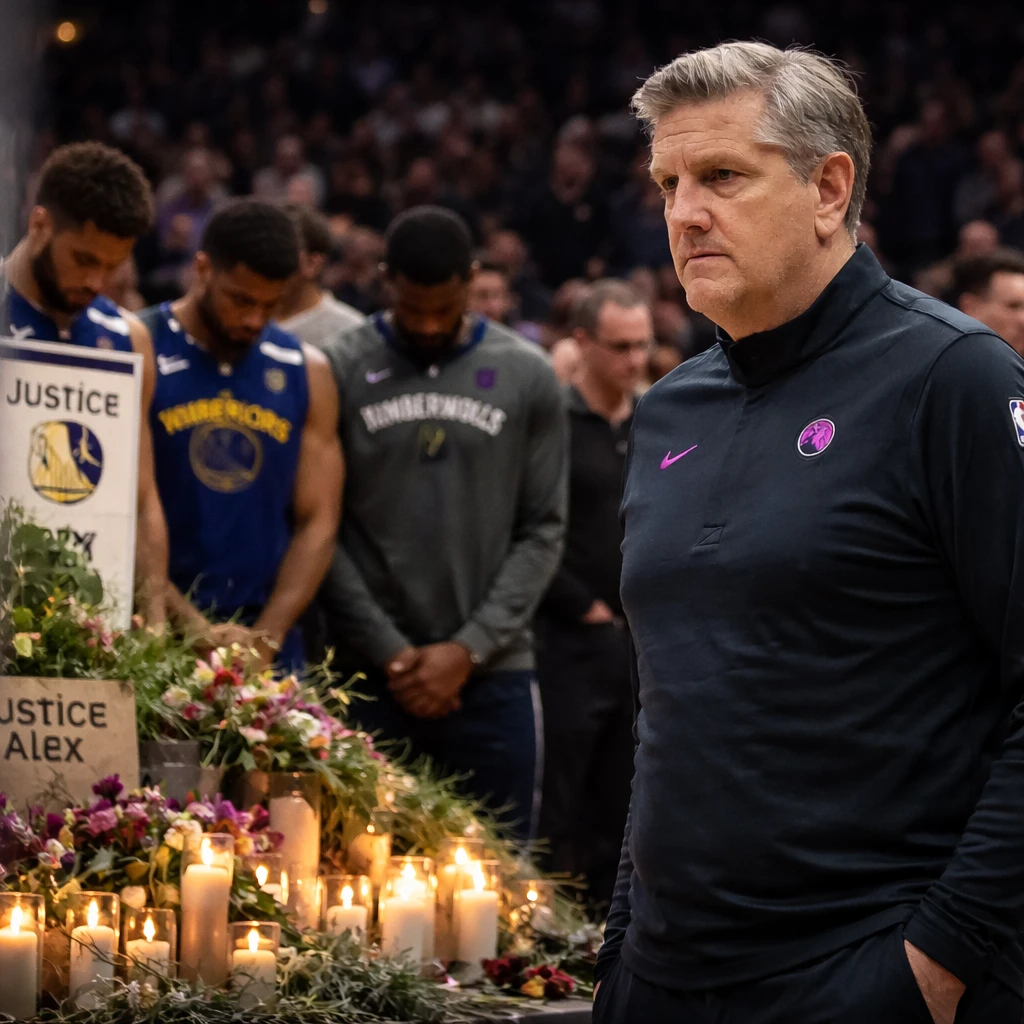

The Minnesota Timberwolves returned to the court on Sunday to face the Golden State Warriors after their originally scheduled game was postponed the previous day due to a community tragedy. The incident cast a heavy shadow over the event, as the city of Minneapolis grappled with the fallout from a fatal shooting involving federal agents.
Timberwolves coach Chris Finch, typically reserved in public, displayed visible emotion as he addressed the situation, revealing a deeply personal connection to the city. "I’m more than a resident. This is my home. I love living here. I love being a part of this community. I’ve been embraced from day one. People have been amazing. It’s sad to watch what is happening," Finch said, acknowledging the shared pain within the community after Alex Pretti, 37, was fatally shot by a federal officer during an immigration enforcement operation.
The game had been delayed by 24 hours to honor the city's grieving process and out of respect for the players and local supporters affected by the tragedy. Finch credited both the NBA and the Warriors organization for their cooperation and support in the decision to postpone.
Despite returning to play, the Timberwolves struggled visibly, culminating in a 111-85 loss to the Warriors. Finch described the team's performance as a "ghost of a performance," marking their lowest scoring output in over four years. Warriors coach Steve Kerr commented on the palpable sorrow permeating the crowd and players, saying, "You could feel the somber atmosphere. Their team, you could tell they were struggling with everything that’s been going on and what the city has been through." Kerr described the event as one of the most unusual and heartbreaking games he had experienced, noting the challenge in focusing amid such circumstances.
Before the contest, the Timberwolves held a moment of silence for Pretti, mirroring a similar tribute earlier in the season for Renee Good, another individual killed by a federal officer. These incidents have coincided with an escalation in immigration enforcement efforts, with the Department of Homeland Security declaring an extensive operation that includes increasing personnel beyond 2,000 officers.
The fatal shooting took place less than two miles from the Target Center, Minneapolis’ home arena. The NBA emphasized that the postponement aimed to safeguard the wellbeing of the Minneapolis community, which was evident in the subdued energy present during the resumed game.
Kerr expressed empathy for the city’s hardship and highlighted the broader social discord affecting the nation. He remarked, "There’s a pall that’s been cast over the city. You can feel it. A lot of people are suffering, and obviously a loss of life is the No. 1 concern. Those families will never get their family members back."
In the days leading up to the game, large protests demanding changes to immigration enforcement unfolded throughout downtown Minneapolis, visible even from the Warriors' hotel. Additional smaller marches occurred prior to Sunday’s match. These demonstrations have extended into various sports communities, with notable athletes and fan groups voicing support for calls to reduce immigration enforcement agency operations.
The Timberwolves, alongside other Minneapolis major league teams, joined more than 60 local companies in a letter urging prompt de-escalation and collaborative efforts among government officials to address community tensions and seek tangible resolutions.
Coach Kerr underscored the difficulty of navigating public anger amid a landscape rife with misinformation and division, advocating for individuals and communities to adhere to foundational values. "People are so angry. There should be an appeal to our better angels to look after one another and to recognize what’s happening," he said.
Team leaders voiced their solidarity and sorrow following the game. Timberwolves star Anthony Edwards reflected on the strong bond he shares with Minnesota and extended prayers on behalf of his family and community. Teammate Julius Randle expressed similar sentiments, emphasizing the tragedy of losing a life regardless of political stance and acknowledging the personal difficulty of witnessing such events in their adopted home.
Support extended beyond the NBA sphere. After a professional women’s hockey game, Minnesota Frost assistant captain Kelly Pannek described pride in the community's response, highlighting the collective hope and resolve demonstrated in the face of troubling circumstances.
As the city and its sports organizations navigate this period of tumult and mourning, the intersection of athletics and social issues remains increasingly prominent, reflecting broader challenges faced across multiple sectors of society.